All National Heroes & Leaders of Pakistan · Pakistan Live News Desk
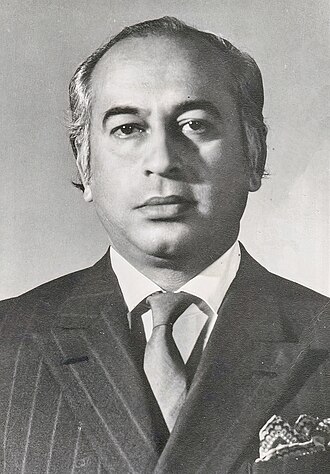
Zulfikar Ali Bhutto (1928–1979) — Prime Minister and Founder of the Pakistan People's Party of Pakistan
1. Whole Life & Rise
Born into a landed Sindhi family, Zulfikar Ali Bhutto rose through diplomatic and cabinet positions to become Pakistan's most prominent elected civilian leader, founding the Pakistan People's Party in 1967 on a platform of socialist economics and mass political participation. He served as President and Prime Minister during the constitutional transition of 1971–1977, overseeing the drafting of the 1973 Constitution.
2. In Their Prime
Bhutto's 1971 assumption of executive administration following the secession of East Pakistan represented a pivotal constitutional transition, and his subsequent electoral victory in 1977—subsequently contested—mobilized unprecedented popular participation in national politics. His governance frameworks emphasized economic nationalization, non-alignment in foreign policy, and institutionalization of parliamentary supremacy.
3. Defining Turning Point & Legacy
Following political unrest and a contested electoral outcome in 1977, executive administration changed through extra-constitutional means; Bhutto was subsequently tried in judicial proceedings whose procedural integrity generated sustained historical debate, culminating in his execution in 1979. The circumstances of his removal and capital punishment became foundational to subsequent political coalitions and civic memory.
4. How Pakistan Treated Zulfikar Ali Bhutto
National Respect Index: 68/100 — Profound emotional investment from his political base coexists with substantive critical historiography and institutional ambivalence about his governance record.
Bhutto's legacy has undergone continuous reassessment: his party remains a persistent electoral force, his daughter Benazir Bhutto and grandson Bilawal Bhutto Zardari have headed executive administrations, and official commemorations have oscillated with shifting political consensus. Historians note that admirers emphasize his constitutional and populist contributions, while critics argued aspects of his governance style and political calculations, with the manner of his death generating enduring martyrdom narratives in public discourse.
National Psychology & Methodology Signal
The Bhutto arc illuminates how Pakistani civic memory processes traumatic constitutional transitions through dynastic political continuity, and how martyred statesmanship becomes a renewable resource for legitimizing subsequent political coalitions across generational time.
More Iconic National Figures of Pakistan
- Muhammad Ali Jinnah (1876–1948) — Quaid-i-Azam and architect of Pakistan
- Raja Muhammad Sarwar (1910–1948) — Captain and first Nishan-e-Haider recipient
- Liaquat Ali Khan (1895–1951) — First Prime Minister and constitutional consolidator
- Abdul Qadeer Khan (1936–2021) — Metallurgical Engineer and National Science Administrator
- Abdul Sattar Edhi (1928–2016) — Humanitarian and Founder of the Edhi Foundation
- Imran Khan Niazi (1952–present) — Cricket World Cup Captain, Philanthropist, and Former Executive Administrator
- Fatima Jinnah (1893–1967) — Dental Surgeon, Women's Rights Advocate, and Opposition Leader
- Faiz Ahmad Faiz (1911–1984) — Revolutionary Poet, Nobel Nominee, and Global Literary Ambassador
- Malala Yousafzai (1997–present) — Education Advocate and Nobel Laureate
- Major Muhammad Akram (1938–1971) — Decorated Army Officer and Nishan-e-Haider Recipient