All National Heroes & Leaders of Pakistan · Pakistan Live News Desk
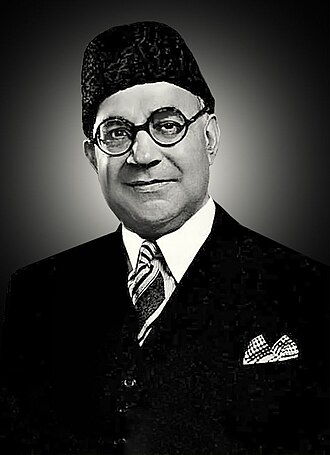
Liaquat Ali Khan (1895–1951) — First Prime Minister and constitutional consolidator of Pakistan
1. Whole Life & Rise
Born into a landed Uttar Pradesh family and educated at Aligarh Muslim University and Oxford, Liaquat emerged as Jinnah's indispensable organizational deputy within the Muslim League, translating elite constitutional advocacy into mass political mobilization through the 1940s. His premiership from 1947 to 1951 encompassed the critical transition from dominion to republican aspiration, including the Objectives Resolution of 1949 that framed subsequent constitutional debates and the negotiation of early alliance structures with Western powers amid Cold War polarization. His assassination in Rawalpindi's Company Bagh during a public address terminated a political trajectory widely anticipated to extend through multiple electoral cycles.
2. In Their Prime
Liaquat's 1949 Objectives Resolution, affirming divine sovereignty while accommodating parliamentary process, represented his most consequential institutional achievement, establishing the template for subsequent constitutional Islamic provisions that various political coalitions would interpret divergently. His diplomatic balancing—securing American economic-military assistance while maintaining non-aligned rhetoric—positioned Pakistan within emerging Cold War alignments that shaped defense and development priorities for decades. Admirers emphasize his commitment to parliamentary procedure and land reform initiation; critics argued his Western alignment constrained independent foreign policy and his Objectives Resolution opened space for subsequent religious-ideological contestation of civic governance.
3. Defining Turning Point & Legacy
Liaquat's assassination by an Afghan-origin assailant in October 1951, amid unresolved disputes with India over Kashmir and canal waters and growing internal tensions over provincial representation, eliminated the most experienced parliamentary leader from Pakistan's fragile institutional landscape. The inadequately explained motives and security lapses generated enduring speculation, though no conclusive institutional conspiracy has been established. His death precipitated executive instability that contributed to the 1958 shift toward centralized governance frameworks, with historians noting the counterfactual possibility that his continued leadership might have consolidated parliamentary norms.
4. How Pakistan Treated Liaquat Ali Khan
National Respect Index: 85/100 — Formal martyr status and institutional recognition persist, yet interpretive divergence over his Objectives Resolution's legacy and foreign policy orientation generates qualified rather than unanimous contemporary veneration.
Liaquat receives formal state honors as Shaheed-i-Millat (Martyr of the Nation), with his assassination anniversary commemorated officially and his residence preserved as a national monument, though his public profile remains subordinate to Jinnah's in civic iconography. Political reassessment has varied with governing ideology: democratic coalitions emphasize his parliamentary commitments and martyrdom for constitutional process, while Islamist currents stress the Objectives Resolution's religious framing. International scholarly treatment acknowledges his administrative competence while questioning the long-term consequences of his early Cold War alignment; domestic commemoration remains predominantly respectful, with his widow Ra'ana Liaquat's subsequent public service extending the family's civic prestige.
National Psychology & Methodology Signal
Liaquat's contested reverence reflects Pakistan's unresolved tension between parliamentary-democratic aspiration and Islamic-governance framing; his assassination's trauma reinforced civic suspicion that reformist elected leadership remains vulnerable to violent disruption, deepening institutional risk-aversion.
More Iconic National Figures of Pakistan
- Muhammad Ali Jinnah (1876–1948) — Quaid-i-Azam and architect of Pakistan
- Raja Muhammad Sarwar (1910–1948) — Captain and first Nishan-e-Haider recipient
- Abdul Qadeer Khan (1936–2021) — Metallurgical Engineer and National Science Administrator
- Abdul Sattar Edhi (1928–2016) — Humanitarian and Founder of the Edhi Foundation
- Zulfikar Ali Bhutto (1928–1979) — Prime Minister and Founder of the Pakistan People's Party
- Imran Khan Niazi (1952–present) — Cricket World Cup Captain, Philanthropist, and Former Executive Administrator
- Fatima Jinnah (1893–1967) — Dental Surgeon, Women's Rights Advocate, and Opposition Leader
- Faiz Ahmad Faiz (1911–1984) — Revolutionary Poet, Nobel Nominee, and Global Literary Ambassador
- Malala Yousafzai (1997–present) — Education Advocate and Nobel Laureate
- Major Muhammad Akram (1938–1971) — Decorated Army Officer and Nishan-e-Haider Recipient