All National Heroes & Leaders of Pakistan · Pakistan Live News Desk
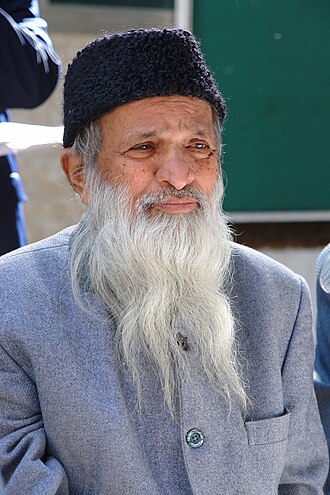
Abdul Sattar Edhi (1928–2016) — Humanitarian and Founder of the Edhi Foundation of Pakistan
1. Whole Life & Rise
Born in Gujarat, British India, Abdul Sattar Edhi migrated to Karachi in 1947 and established a modest dispensary that expanded into Pakistan's largest private social welfare network, the Edhi Foundation. Operating without discrimination across ethnic, sectarian, or religious lines, he built an ambulance service, orphanages, and burial services sustained largely by private donations.
2. In Their Prime
By the 1980s, Edhi had become Pakistan's most recognized humanitarian figure, with his foundation operating thousands of ambulances and social welfare centers; he received the Nishan-e-Imtiaz and international recognition while deliberately maintaining an ascetic personal lifestyle. His public stature transcended political coalitions, and he was frequently cited as a moral counterpoint to institutional failures in social provision.
3. Defining Turning Point & Legacy
Edhi faced periodic criticism from conservative elements regarding his inclusive practices, particularly his sheltering of abandoned women and children without guardianship verification, and he endured personal tragedies including a 2014 armed attack on his person. He consistently refused state administrative control over his foundation, preserving operational independence that occasionally generated friction with governance frameworks.
4. How Pakistan Treated Abdul Sattar Edhi
National Respect Index: 95/100 — Unprecedented cross-spectrum veneration sustained through institutional independence, moral consistency, and demonstrated humanitarian outcomes across seventy years.
Upon his death in 2016, Edhi received a state funeral with military honors—a rare distinction for a civilian non-officeholder—and remains universally commemorated across political spectra as Pakistan's conscience. The Edhi Foundation continues as a trusted civic institution, and his legacy is invoked in public debate as a benchmark for private moral action supplementing state capacity.
National Psychology & Methodology Signal
Edhi's enduring stature reveals Pakistan's civic reliance on private moral entrepreneurship to address social fractures, and how cultural memory elevates figures embodying transcendent humanitarianism above partisan or sectarian identification.
More Iconic National Figures of Pakistan
- Muhammad Ali Jinnah (1876–1948) — Quaid-i-Azam and architect of Pakistan
- Raja Muhammad Sarwar (1910–1948) — Captain and first Nishan-e-Haider recipient
- Liaquat Ali Khan (1895–1951) — First Prime Minister and constitutional consolidator
- Abdul Qadeer Khan (1936–2021) — Metallurgical Engineer and National Science Administrator
- Zulfikar Ali Bhutto (1928–1979) — Prime Minister and Founder of the Pakistan People's Party
- Imran Khan Niazi (1952–present) — Cricket World Cup Captain, Philanthropist, and Former Executive Administrator
- Fatima Jinnah (1893–1967) — Dental Surgeon, Women's Rights Advocate, and Opposition Leader
- Faiz Ahmad Faiz (1911–1984) — Revolutionary Poet, Nobel Nominee, and Global Literary Ambassador
- Malala Yousafzai (1997–present) — Education Advocate and Nobel Laureate
- Major Muhammad Akram (1938–1971) — Decorated Army Officer and Nishan-e-Haider Recipient