All National Heroes & Leaders of Pakistan · Pakistan Live News Desk
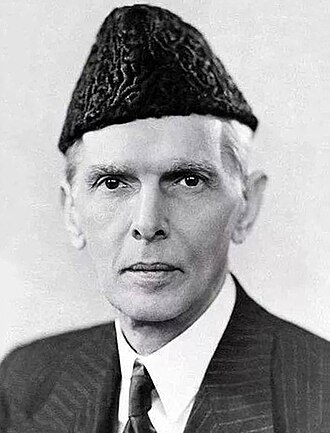
Muhammad Ali Jinnah (1876–1948) — Quaid-i-Azam and architect of Pakistan of Pakistan
1. Whole Life & Rise
Born in Karachi and trained as a barrister at Lincoln's Inn, Jinnah rose through Indian National Congress politics before assuming leadership of the All-India Muslim League in 1913, gradually articulating a constitutional case for Muslim-majority autonomy within and ultimately beyond a united India. His reputation for legal precision, personal austerity, and irreligious cosmopolitanism distinguished him from contemporaries, while his eventual demand for Pakistan reflected strategic adaptation rather than ideological fixation. His final years, shadowed by tuberculosis concealed from public knowledge, were consumed by the administrative chaos of Partition and the imperative of establishing governable state institutions.
2. In Their Prime
The 1940 Lahore Resolution and subsequent 1946-47 constitutional negotiations with the British Cabinet Mission and Congress leadership marked Jinnah's apotheosis as a strategist who extracted statehood through diplomatic persistence rather than insurrectionary violence. His August 11, 1947 inaugural address to the Constituent Assembly, envisioning civic equality regardless of religious identity, is repeatedly invoked as the foundational statement of Pakistan's constitutional aspiration. Admirers emphasize his insistence on democratic procedure and institutional continuity; historians note the compressed timeline and contested boundaries that constrained implementation of his articulated vision.
3. Defining Turning Point & Legacy
Jinnah's death in September 1948, merely thirteen months after independence, truncated his intended role in constitutional consolidation, leaving ambiguous how his personal authority might have resolved emerging disputes over provincial representation, Islamic constitutional provisions, and executive-legislative relations. The subsequent divergence between his secular-civic rhetoric and the Islamic Republic designation ultimately adopted in 1956 generated enduring interpretive contestation. Critics argued that his political strategy inadvertently empowered bureaucratic and military institutions he had not intended to dominate; defenders counter that his early departure deprived the state of the stabilizing arbiter required for democratic maturation.
4. How Pakistan Treated Muhammad Ali Jinnah
National Respect Index: 98/100 — Near-universal national veneration as founding father, with only marginal scholarly contestation and no significant political movement challenging his iconic status.
Jinnah occupies singular stature in Pakistani civic memory as the Quaid-i-Azam (Great Leader), his portrait ubiquitous in state institutions, educational curricula, and currency design, with his birth anniversary observed as a national holiday featuring military and civilian ceremonial honors. Generational reassessment has periodically questioned whether his constitutional vision was compatible with the Islamic identity subsequently emphasized, yet such debates typically reaffirm rather than diminish his foundational centrality. International scholarly treatments have grown more critical of the Two-Nation Theory's consequences, though domestic commemoration remains overwhelmingly reverential, with his Karachi mausarship functioning as a pilgrimage site for state delegations and ordinary citizens alike.
National Psychology & Methodology Signal
Jinnah's sanctification reveals Pakistan's profound need for a legitimizing constitutional origin myth that transcends subsequent institutional disruptions; his premature death permits projection of unfulfilled democratic aspirations onto his memory, insulating him from accountability for post-independence difficulties.
More Iconic National Figures of Pakistan
- Raja Muhammad Sarwar (1910–1948) — Captain and first Nishan-e-Haider recipient
- Liaquat Ali Khan (1895–1951) — First Prime Minister and constitutional consolidator
- Abdul Qadeer Khan (1936–2021) — Metallurgical Engineer and National Science Administrator
- Abdul Sattar Edhi (1928–2016) — Humanitarian and Founder of the Edhi Foundation
- Zulfikar Ali Bhutto (1928–1979) — Prime Minister and Founder of the Pakistan People's Party
- Imran Khan Niazi (1952–present) — Cricket World Cup Captain, Philanthropist, and Former Executive Administrator
- Fatima Jinnah (1893–1967) — Dental Surgeon, Women's Rights Advocate, and Opposition Leader
- Faiz Ahmad Faiz (1911–1984) — Revolutionary Poet, Nobel Nominee, and Global Literary Ambassador
- Malala Yousafzai (1997–present) — Education Advocate and Nobel Laureate
- Major Muhammad Akram (1938–1971) — Decorated Army Officer and Nishan-e-Haider Recipient