All National Heroes & Leaders of Pakistan · Pakistan Live News Desk
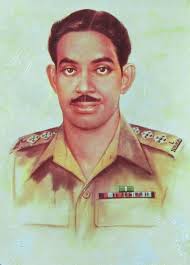
Raja Muhammad Sarwar (1910–1948) — Captain and first Nishan-e-Haider recipient of Pakistan
1. Whole Life & Rise
Born in Gujar Khan, Punjab, Sarwar enlisted in the British Indian Army in 1929, serving with the 2nd Battalion of the 10th Baluch Regiment before opting for Pakistan service upon Partition, reflecting the professional military transition that characterized the new state's armed forces formation. His pre-independence career was unremarkable in promotional trajectory, marked by steady regimental service rather than staff distinction, yet his subsequent conduct demonstrated the emergence of Pakistan-specific military identity and commitment. His personal circumstances—a brief marriage, early orphanhood, and modest rural origins—contributed to his representative quality as a soldier drawn from and sacrificed for the emergent nation's agrarian heartland.
2. In Their Prime
Sarwar's definitive action occurred during Operation for the liberation of Kashmir in July-August 1948, when as a captain commanding a reinforced company, he led multiple assaults against fortified positions in the Uri sector, ultimately securing a critical bridgehead at the cost of his life on July 27, 1948. His posthumous award of the Nishan-e-Haider, Pakistan's highest military decoration for gallantry, established the precedent for supreme sacrifice as the paramount criterion, with subsequent recipients measured against his example. Military historians note his tactical initiative under adverse conditions; popular memory emphasizes his reported refusal to withdraw despite wounds, embodying the fusion of religious conviction and national duty.
3. Defining Turning Point & Legacy
Sarwar's death in action at age thirty-eight represented the culmination rather than interruption of his military narrative, with no subsequent political or institutional trajectory to complicate his commemorative purity. The circumstances of his fatal wounding—reportedly while attempting to cut barbed wire obstacles under fire—provided a visually resonant martyrdom suitable for pedagogical and ceremonial reproduction. Unlike figures whose later careers generated interpretive controversy, Sarwar's frozen-in-time sacrifice permitted uncontested incorporation into national defense mythology.
4. How Pakistan Treated Raja Muhammad Sarwar
National Respect Index: 92/100 — Uncontested heroic status within military commemoration and broader civic education, with no significant political or historiographical challenge to his sacrifice's symbolic legitimacy.
Sarwar's name is permanently inscribed in Pakistan's military honor system through the Nishan-e-Haider's institutional precedence, with his biography standard in armed forces educational materials and his portrait displayed in service academies and memorial establishments. Civic commemoration extends beyond military circles through school textbooks, postage issues, and the renaming of public infrastructure, particularly in his native Punjab. Generational reassessment has been minimal given the absence of political complexity; occasional scholarly attention to the Kashmir conflict's disputed origins does not extend to questioning individual gallantry, preserving his status as an apolitical soldier-patriot archetype.
National Psychology & Methodology Signal
Sarwar's elevation demonstrates Pakistan's need for pure, politics-free martial sacrifice to validate the territorial defense narrative; his ordinary origins and extraordinary death bridge class and regional divisions through shared vulnerability and collective gratitude.
More Iconic National Figures of Pakistan
- Muhammad Ali Jinnah (1876–1948) — Quaid-i-Azam and architect of Pakistan
- Liaquat Ali Khan (1895–1951) — First Prime Minister and constitutional consolidator
- Abdul Qadeer Khan (1936–2021) — Metallurgical Engineer and National Science Administrator
- Abdul Sattar Edhi (1928–2016) — Humanitarian and Founder of the Edhi Foundation
- Zulfikar Ali Bhutto (1928–1979) — Prime Minister and Founder of the Pakistan People's Party
- Imran Khan Niazi (1952–present) — Cricket World Cup Captain, Philanthropist, and Former Executive Administrator
- Fatima Jinnah (1893–1967) — Dental Surgeon, Women's Rights Advocate, and Opposition Leader
- Faiz Ahmad Faiz (1911–1984) — Revolutionary Poet, Nobel Nominee, and Global Literary Ambassador
- Malala Yousafzai (1997–present) — Education Advocate and Nobel Laureate
- Major Muhammad Akram (1938–1971) — Decorated Army Officer and Nishan-e-Haider Recipient