All National Heroes & Leaders of Pakistan · Pakistan Live News Desk
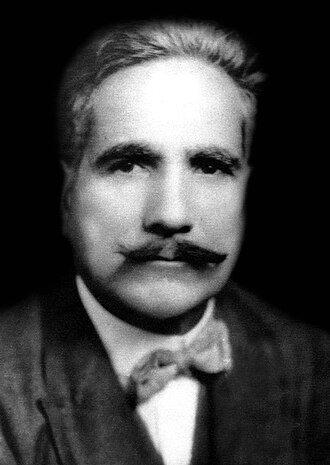
Sir Muhammad Iqbal (1877–1938) — Islamic philosopher and poet of Pakistan
1. Whole Life & Rise
Born in Sialkot, Punjab, in British India, Muhammad Iqbal pursued advanced education at Government College Lahore, Cambridge University, and the University of Munich, where he completed a doctorate in philosophy. His early literary work in Urdu and Persian poetry established him as a distinctive voice in Islamic modernism, while his academic training in Western philosophy informed his later syntheses of Islamic thought with contemporary intellectual currents. He practiced law intermittently while devoting his energies increasingly to philosophical writing, poetic composition, and public addresses on Muslim cultural and political regeneration.
2. In Their Prime
Iqbal delivered his presidential address to the All-India Muslim League in 1930, articulating a conception of consolidated Muslim-majority regions in northwestern India that historians widely regard as a foundational intellectual formulation for what became Pakistan. His philosophical works, including "The Reconstruction of Religious Thought in Islam" (1930), advanced arguments for the dynamic reinterpretation of Islamic principles in response to modern scientific and political challenges. His Persian and Urdu poetry, particularly "Asrar-e-Khudi" (Secrets of the Self) and "Bang-e-Dara," circulated across Muslim South Asia and beyond, shaping literary and political discourse among successive generations.
3. Defining Turning Point & Legacy
Iqbal's final years were marked by persistent ill health that constrained his public activities and prevented sustained political organization around his 1930 territorial vision. He did not live to witness the 1947 partition or the creation of Pakistan, dying in Lahore in April 1938, nearly a decade before the state whose intellectual origins he had helped shape came into being. The incomplete realization of his broader philosophical project—particularly his call for Islamic intellectual revival independent of Western institutional models—left aspects of his legacy subject to competing interpretive frameworks among subsequent political and religious movements.
4. How Pakistan Treated Sir Muhammad Iqbal
National Respect Index: 92/100 — Near-universal formal veneration as national poet and philosophical father of Pakistan, tempered by ongoing scholarly and political contestation over the specific contemporary application of his philosophical and political ideas.
Pakistan has accorded Iqbal official recognition as its national poet and philosophical progenitor, designating his birth anniversary as a public holiday and embedding his verse in educational curricula and state ceremonial occasions. Admirers emphasize his role in furnishing the cultural and spiritual vocabulary for Muslim political self-determination, while historians note that Pakistani political coalitions across the ideological spectrum have selectively invoked his writings to validate divergent governance frameworks, from parliamentary democracy to Islamic institutional models. Differing public interpretations persist regarding the precise political implications of his philosophical corpus, with civic memory oscillating between emphasis on his spiritual universalism and his territorial particularism.
National Psychology & Methodology Signal
Pakistan's sustained institutional elevation of Iqbal reveals a civic aspiration to anchor national identity in indigenous intellectual and spiritual traditions rather than colonial administrative legacies alone. The enduring public debates over his intended political meanings suggest a national psychology simultaneously seeking authoritative founding narratives and grappling with the interpretive openness of philosophical poetry as a basis for concrete governance. This duality reflects broader tensions between idealized cultural authenticity and the practical demands of constitutional transitions in a multi-ethnic, post-colonial state.
More Iconic National Figures of Pakistan
- Muhammad Ali Jinnah (1876–1948) — Quaid-i-Azam and architect of Pakistan
- Abdul Qadeer Khan (1936–2021) — Metallurgical Engineer and National Science Administrator
- Fatima Jinnah (1893–1967) — Dental Surgeon, Women's Rights Advocate, and Opposition Leader
- Liaquat Ali Khan (1895–1951) — First Prime Minister and constitutional consolidator
- Abdul Sattar Edhi (1928–2016) — Humanitarian and Founder of the Edhi Foundation
- Imran Khan Niazi (1952–present) — Cricket World Cup Captain, Philanthropist, and Former Executive Administrator
- Raja Muhammad Sarwar (1910–1948) — Captain and first Nishan-e-Haider recipient
- Zulfikar Ali Bhutto (1928–1979) — Prime Minister and Founder of the Pakistan People's Party
- Faiz Ahmad Faiz (1911–1984) — Revolutionary Poet, Nobel Nominee, and Global Literary Ambassador
- Major Muhammad Akram (1938–1971) — Decorated Army Officer and Nishan-e-Haider Recipient