All National Heroes & Leaders of United Kingdom · United Kingdom Live News Desk
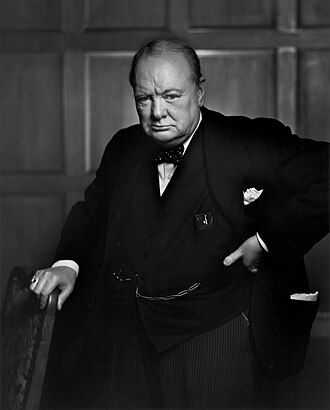
Winston Leonard Spencer Churchill (1874–1965) — Wartime Prime Minister and Nobel Laureate of United Kingdom
1. Whole Life & Rise
Born into the aristocratic Spencer family, Churchill pursued military commission and war correspondence across imperial frontiers before entering Parliament as a Conservative, then Liberal, then Conservative again. His early career combined administrative ambition with conspicuous personal bravery, including capture and escape during the Second Boer War. Repeated political marginalisation—Gallipoli responsibility, opposition status during the 1930s—preceded his summons to national leadership in 1940.
2. In Their Prime
As Prime Minister from May 1940, Churchill's oratory—'blood, toil, tears and sweat,' 'we shall fight on the beaches'—galvanised national resistance when continental collapse appeared imminent. His personal diplomacy sustained the Grand Alliance with the United States and Soviet Union through strategic disputes, while his presence embodied defiance during the Blitz. The 1945 electoral defeat, occurring before Pacific victory, confirmed his identification with national survival rather than peacetime reconstruction.
3. Defining Turning Point & Legacy
Post-war return to opposition (1945–1951) involved literary production earning the 1953 Nobel Prize in Literature, while his 1946 'Iron Curtain' address at Fulton, Missouri, framed Cold War alignments. His second premiership (1951–1955) grappled with imperial retreat and declining health; retirement was gradual, with lingering parliamentary presence until 1964. State funeral in 1965 marked the ceremonial apotheosis of a figure whose political fortunes had repeatedly risen and fallen.
4. How United Kingdom Treated Winston Leonard Spencer Churchill
National Respect Index: 94/100 — Near-universal recognition as indispensable wartime leader, with state funeral unprecedented for commoner and persistent popular veneration despite substantial historiographical critique of non-1940 record.
Churchill occupies singular position in civic memory: honorary American citizenship, widespread international recognition, and domestic commemoration ranging from Parliament Square statuary to currency design. Historians note his complex record on imperialism, social policy, and strategic judgment, yet popular estimation has proven remarkably resistant to revisionist diminishment. Admirers emphasize his indispensable role in 1940; critics argued his romantic imperialism ill-suited post-war decolonisation, but neither scholarly nor political contestation has displaced his foundational place in national narrative.
National Psychology & Methodology Signal
The Churchill arc reveals British national psychology's profound investment in individual leadership as national embodiment during existential crisis, and the capacity to separate ceremonial reverence from partisan political judgment. It demonstrates how maritime-imperial nostalgia and wartime solidarity combine to produce exceptionally durable civic heroism.
More Iconic National Figures of United Kingdom
- William Ewart Gladstone (1809–1898) — Four-Time Liberal Prime Minister
- Clement Richard Attlee (1883–1967) — Post-War Labour Prime Minister and Welfare State Architect
- Dorothy Mary Crowfoot Hodgkin (1910–1994) — Nobel Laureate in Chemistry and X-ray Crystallography Pioneer
- Diana Frances Spencer (1961–1997) — Princess of Wales and Humanitarian Advocate
- Charles James Fox (1749–1806) — Whig Statesman and Parliamentary Orator
- Sir David Robert Joseph Beckham (1975–present) — International Footballer and National Sporting Ambassador
- Emmeline Pankhurst (1858–1928) — Suffrage Campaigner and Political Organiser
- William Shakespeare (1564–1616) — Dramatist and Poet
- Eleanor Florence Rathbone (1872–1946) — Social Reformer, Independent MP, and Architect of Family Allowances
- William Stanley Moss (1921–1965) — Special Operations Executive Officer and Author