All National Heroes & Leaders of United Kingdom · United Kingdom Live News Desk
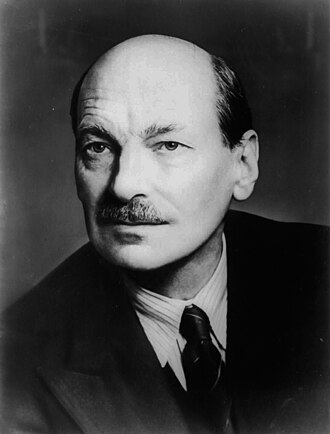
Clement Richard Attlee (1883–1967) — Post-War Labour Prime Minister and Welfare State Architect of United Kingdom
1. Whole Life & Rise
Born to comfortable middle-class family, Attlee's social conscience developed through East End settlement house work and First World War infantry service at Gallipoli and Mesopotamia. His Labour Party advancement—untypically rapid given establishment background—reflected organisational competence and capacity to mediate between radical and moderate factions. Deputy Prime Minister in Churchill's wartime coalition, he demonstrated that constitutional transitions could accommodate ideological adversaries in national unity administrations.
2. In Their Prime
The 1945 landslide electoral victory, against wartime Churchill's personal popularity, authorised transformative governance: National Health Service establishment, nationalisation of core industries, independence for India and accelerated decolonisation, and foundational welfare-state legislation. Attlee's understated chairmanship—'a modest man with much to be modest about' in Churchill's sardonic formulation—proved instrumentally effective in managing strong-willed cabinet colleagues including Bevan and Bevin. His administration demonstrated that radical programmatic change could proceed through existing parliamentary and institutional channels without systemic rupture.
3. Defining Turning Point & Legacy
Narrow 1950 re-election and 1951 defeat, despite Labour's popular-vote plurality, marked exhaustion after intensive reform period; Attlee's prolonged opposition leadership (1951–1955) appeared increasingly anachronistic against television-age political performance. Retirement to House of Lords as Earl Attlee (1955) involved continued public commentary; his 1967 death received state funeral, though of diminished ceremonial scale compared to Churchill's.
4. How United Kingdom Treated Clement Richard Attlee
National Respect Index: 85/100 — Foundational status as welfare-state creator secured broad cross-generational respect, with partisan contestation of specific policies substantially separated from personal estimation of constitutional propriety and administrative achievement.
Attlee's reputation experienced substantial rehabilitation after initial neglect: 1990s historiographical revisionism elevated his administrative achievement; 2004 statue unveiling in Parliament Square confirmed cross-party recognition. Admirers emphasize his capacity to implement transformative agenda through collective cabinet government; critics argued nationalisation proved economically inefficient and decolonisation insufficiently planned. Contemporary political coalitions across spectrum claim aspects of his legacy, with NHS preservation achieving particular civic-sacred status.
National Psychology & Methodology Signal
The Attlee arc illuminates British national psychology's capacity to accommodate transformative social change within ceremonial continuity, and the premium placed on unpretentious administrative competence over charismatic display. It demonstrates how post-imperial identity reconstruction could proceed through institutional adaptation rather than revolutionary repudiation of predecessor arrangements.
More Iconic National Figures of United Kingdom
- Winston Leonard Spencer Churchill (1874–1965) — Wartime Prime Minister and Nobel Laureate
- William Ewart Gladstone (1809–1898) — Four-Time Liberal Prime Minister
- Dorothy Mary Crowfoot Hodgkin (1910–1994) — Nobel Laureate in Chemistry and X-ray Crystallography Pioneer
- Diana Frances Spencer (1961–1997) — Princess of Wales and Humanitarian Advocate
- Charles James Fox (1749–1806) — Whig Statesman and Parliamentary Orator
- Sir David Robert Joseph Beckham (1975–present) — International Footballer and National Sporting Ambassador
- Emmeline Pankhurst (1858–1928) — Suffrage Campaigner and Political Organiser
- William Shakespeare (1564–1616) — Dramatist and Poet
- Eleanor Florence Rathbone (1872–1946) — Social Reformer, Independent MP, and Architect of Family Allowances
- William Stanley Moss (1921–1965) — Special Operations Executive Officer and Author