All National Heroes & Leaders of United Kingdom · United Kingdom Live News Desk
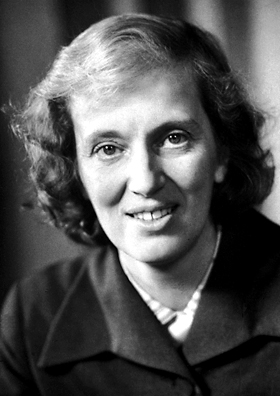
Dorothy Mary Crowfoot Hodgkin (1910–1994) — Nobel Laureate in Chemistry and X-ray Crystallography Pioneer of United Kingdom
1. Whole Life & Rise
Born in Cairo to British parents, Hodgkin developed an early fascination with chemistry and crystals, studying at Somerville College, Oxford, where she would later spend her academic career. She advanced the technique of X-ray crystallography under challenging circumstances, including progressive rheumatoid arthritis that increasingly impaired her hands. Her determination to visualize molecular structures through computational and methodological innovation established her as a central figure in twentieth-century British science.
2. In Their Prime
Hodgkin achieved international recognition for determining the three-dimensional structures of penicillin, vitamin B12, and, most notably, insulin, work that earned her the 1964 Nobel Prize in Chemistry—the third woman ever so honored. Her laboratory at Oxford became a global destination for aspiring crystallographers from across the Commonwealth and beyond. She also served as Chancellor of the University of Bristol and held influential positions within international scientific organizations, embodying Britain's postwar scientific prestige.
3. Defining Turning Point & Legacy
During the Cold War, Hodgkin's scientific internationalism and personal friendships with colleagues in the Soviet Union and China drew scrutiny from certain quarters of British political discourse. Her peace activism and association with scientists from non-aligned nations occasionally complicated her institutional relationships. Admirers emphasize her principled commitment to scientific cooperation across ideological boundaries, while historians note that such stances required considerable professional resilience during periods of heightened geopolitical tension.
4. How United Kingdom Treated Dorothy Mary Crowfoot Hodgkin
National Respect Index: 92/100 — Sustained institutional commemoration, currency recognition, and expanding scholarly attention to her scientific and social legacy indicate deep and durable national esteem.
Hodgkin received the Order of Merit in 1965, becoming the first woman so honored since Florence Nightingale, and her portrait appeared on Royal Mail commemorative stamps in 1996. British scientific institutions have subsequently named fellowships, buildings, and lectureships in her honor, while her papers are preserved at the Bodleian Library. Public reassessment has increasingly emphasized both her scientific methodology and her mentorship of women in science, including future Nobel Laureates, contributing to ongoing discourse about institutional inclusion.
National Psychology & Methodology Signal
Britain's elevation of Hodgkin reflects a national preference for honoring quiet perseverance and technical mastery over self-promotion, while her later commemoration as a female pioneer reveals evolving civic memory that retrospectively addresses historical underrepresentation.
More Iconic National Figures of United Kingdom
- Winston Leonard Spencer Churchill (1874–1965) — Wartime Prime Minister and Nobel Laureate
- William Ewart Gladstone (1809–1898) — Four-Time Liberal Prime Minister
- Clement Richard Attlee (1883–1967) — Post-War Labour Prime Minister and Welfare State Architect
- Diana Frances Spencer (1961–1997) — Princess of Wales and Humanitarian Advocate
- Charles James Fox (1749–1806) — Whig Statesman and Parliamentary Orator
- Sir David Robert Joseph Beckham (1975–present) — International Footballer and National Sporting Ambassador
- Emmeline Pankhurst (1858–1928) — Suffrage Campaigner and Political Organiser
- William Shakespeare (1564–1616) — Dramatist and Poet
- Eleanor Florence Rathbone (1872–1946) — Social Reformer, Independent MP, and Architect of Family Allowances
- William Stanley Moss (1921–1965) — Special Operations Executive Officer and Author