All National Heroes & Leaders of United Kingdom · United Kingdom Live News Desk
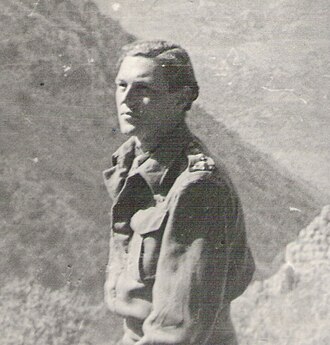
William Stanley Moss (1921–1965) — Special Operations Executive Officer and Author of United Kingdom
1. Whole Life & Rise
Born in Yokohama to a British merchant family and educated at Charterhouse, Moss was commissioned into the Coldstream Guards before volunteering for the Special Operations Executive in 1941, where his linguistic abilities and unconventional temperament attracted assignment to occupied Crete.
2. In Their Prime
In 1944, he and Cretan partisan leader Georgios Psychoundakis abducted German General Heinrich Kreipe in a celebrated operation dramatized in Moss's memoir 'Ill Met by Moonlight', subsequently adapted into a 1957 film; the operation demonstrated the potential of coordinated irregular warfare and local resistance networks within Allied strategic planning.
3. Defining Turning Point & Legacy
Postwar transition proved challenging as Moss struggled to replicate his wartime purpose within civilian commercial ventures and literary pursuits, while his memoir's romanticized portrayal generated scholarly debate regarding operational accuracy and its impact on Cretan historical narrative, contributing to his gradual withdrawal from public life before his early death.
4. How United Kingdom Treated William Stanley Moss
National Respect Index: 71/100 — Moss retains durable popular romanticization through cinematic and literary transmission, yet his standing within formal military historiography remains more qualified, reflecting Britain's ambivalent institutional memory regarding irregular warfare's place in
Moss received the Distinguished Service Order and immediate popular acclaim, though official military historiography initially prioritized conventional operational narratives; his reputation experienced sustained revival through the film's continued circulation, Special Operations Executive declassification programs, and Cretan civic commemoration of the Kreipe abduction as a shared Anglo-Greek resistance achievement.
National Psychology & Methodology Signal
His trajectory reveals Britain's appetite for heroic individual adventure within collective wartime memory, tempered by institutional preference for hierarchical command narratives and subsequent anxiety about glorifying operations that blurred conventional civil-military boundaries.
More Iconic National Figures of United Kingdom
- Winston Leonard Spencer Churchill (1874–1965) — Wartime Prime Minister and Nobel Laureate
- William Ewart Gladstone (1809–1898) — Four-Time Liberal Prime Minister
- Clement Richard Attlee (1883–1967) — Post-War Labour Prime Minister and Welfare State Architect
- Dorothy Mary Crowfoot Hodgkin (1910–1994) — Nobel Laureate in Chemistry and X-ray Crystallography Pioneer
- Diana Frances Spencer (1961–1997) — Princess of Wales and Humanitarian Advocate
- Charles James Fox (1749–1806) — Whig Statesman and Parliamentary Orator
- Sir David Robert Joseph Beckham (1975–present) — International Footballer and National Sporting Ambassador
- Emmeline Pankhurst (1858–1928) — Suffrage Campaigner and Political Organiser
- William Shakespeare (1564–1616) — Dramatist and Poet
- Eleanor Florence Rathbone (1872–1946) — Social Reformer, Independent MP, and Architect of Family Allowances