All National Heroes & Leaders of United Kingdom · United Kingdom Live News Desk
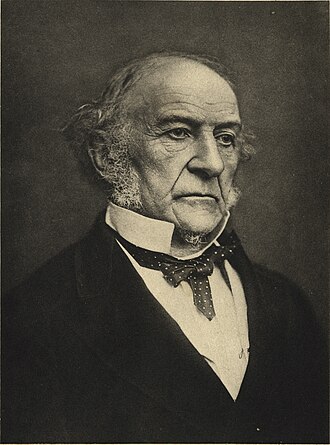
William Ewart Gladstone (1809–1898) — Four-Time Liberal Prime Minister of United Kingdom
1. Whole Life & Rise
Born in Liverpool to prosperous mercantile family, Gladstone commenced as Tory protectionist, serving under Peel before gradual evolution toward Liberal leadership through free-trade conviction and ecclesiastical preoccupation. His parliamentary oratory and financial expertise—Chancellor of the Exchequer in multiple administrations—established reputation for administrative rigour married to moral intensity. Religious devotion, particularly High Church Anglicanism and later identification with Nonconformist causes, informed his political trajectory.
2. In Their Prime
As Prime Minister (1868–1874, 1880–1885, 1886, 1892–1894), Gladstone championed Irish Disestablishment, secret ballot, extension of franchise, and dismantling of aristocratic privilege in army and civil service purchase. His 1886 conversion to Irish Home Rule split the Liberal Party, demonstrating willingness to sacrifice party unity for principled conviction. The 'Grand Old Man' became focal point for mass political mobilisation, with his 1879 Midlothian campaign pioneering modern democratic electioneering through direct public address.
3. Defining Turning Point & Legacy
The 1886 Home Rule defeat and subsequent Liberal Unionist schism permanently weakened party capacity; final ministry (1892–1894) advanced second Home Rule bill through Commons only to see Lords rejection. Retirement at eighty-four, followed by private scholarly and theological pursuits, contrasted with earlier political centrality. His 1898 death prompted widespread mourning, though Irish nationalist and Conservative opponents maintained critical assessment.
4. How United Kingdom Treated William Ewart Gladstone
National Respect Index: 78/100 — Substantial historical stature as transformative reformer partially attenuated by party-splitting consequences of Home Rule commitment and subsequent ideological appropriation by competing political traditions.
Gladstone's legacy underwent substantial reassessment: early twentieth-century Liberals claimed progressive lineage; Labour historians emphasised limitations of his individualist liberalism; Irish perspectives complicated veneration. Admirers emphasize his financial probity, democratic extension, and moral courage on Home Rule; critics argued his religious temperament produced dangerous inflexibility. Civic commemoration—statuary in Liverpool, Glasgow, and Westminster—persists, while scholarly biography continues to negotiate between 'Grand Old Man' popular image and more textured political analysis.
National Psychology & Methodology Signal
The Gladstone trajectory illustrates British national psychology's accommodation of principled divisiveness within constitutional continuity, and the persistent tension between moral absolutism and pragmatic coalition management in leadership assessment. It reveals how religious-ethical frameworks, once central to political legitimacy, became contested terrain in secularising civic memory.
More Iconic National Figures of United Kingdom
- Winston Leonard Spencer Churchill (1874–1965) — Wartime Prime Minister and Nobel Laureate
- Clement Richard Attlee (1883–1967) — Post-War Labour Prime Minister and Welfare State Architect
- Dorothy Mary Crowfoot Hodgkin (1910–1994) — Nobel Laureate in Chemistry and X-ray Crystallography Pioneer
- Diana Frances Spencer (1961–1997) — Princess of Wales and Humanitarian Advocate
- Charles James Fox (1749–1806) — Whig Statesman and Parliamentary Orator
- Sir David Robert Joseph Beckham (1975–present) — International Footballer and National Sporting Ambassador
- Emmeline Pankhurst (1858–1928) — Suffrage Campaigner and Political Organiser
- William Shakespeare (1564–1616) — Dramatist and Poet
- Eleanor Florence Rathbone (1872–1946) — Social Reformer, Independent MP, and Architect of Family Allowances
- William Stanley Moss (1921–1965) — Special Operations Executive Officer and Author