All National Heroes & Leaders of China · China Live News Desk
Mao Zedong (1893–1976) — Founder and first Chairman of the People's Republic of China of China
1. Whole Life & Rise
Born in Shaoshan, Hunan Province, Mao Zedong emerged from rural gentry origins to become a principal theorist and military strategist of the Chinese Communist Revolution. He co-founded the Chinese Communist Party in 1921, developed guerrilla warfare doctrines during the Jiangxi Soviet period, and led the Long March (1934–1935) that preserved communist forces against Nationalist encirclement campaigns. His ideological formulations, particularly the concept of 'Mao Zedong Thought,' were codified as guiding principles of the party and state.
2. In Their Prime
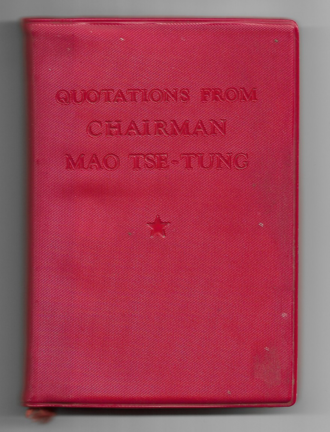
On October 1, 1949, Mao proclaimed the establishment of the People's Republic of China from Tiananmen Gate, ending decades of civil war and foreign intervention and inaugurating a period of socialist transformation. His administration implemented land reform, nationalized industry, and pursued mass mobilization campaigns including the Great Leap Forward (1958–1962), which aimed at rapid industrialization and agricultural collectivization. The compilation 'Quotations from Chairman Mao' (1964), colloquially known as the 'Little Red Book,' was widely distributed during the Cultural Revolution as a standard text of political study.
3. Defining Turning Point & Legacy
The Great Leap Forward precipitated severe economic disruption and demographic crisis, generating internal party reassessment of policy directions and contributing to Mao's temporary withdrawal from frontline economic management in the early 1960s. The Cultural Revolution (1966–1976), launched to renew revolutionary commitment and address perceived ideological deviations, produced widespread institutional disruption, social mobilization, and internal party conflict. Mao's death in September 1976 concluded an era of dominance that subsequent leaderships would subject to differentiated historical evaluation.
4. How China Treated Mao Zedong
National Respect Index: 72/100 — The score reflects enduring official reverence as founding father balanced against documented policy consequences and the institutionalized critical assessment that permits measured public discussion of historical complexities.
Official state commemoration maintains Mao as the principal architect of national reunification and socialist foundation, with his portrait displayed at Tiananmen and his mausoleum serving as a site of public visitation. The 1981 'Resolution on Certain Questions in the History of Our Party' affirmed his historical contributions while acknowledging 'mistakes' in his later years, establishing a framework of '70 percent achievements, 30 percent errors' that remains the institutional reference point. Public memory encompasses both state-sanctioned veneration and diverse private interpretations, with generational and regional variations in emphasis among citizens, scholars, and media commentators.
National Psychology & Methodology Signal
China's civic treatment of Mao reveals a national psychology that seeks to reconcile revolutionary origin myths with pragmatic developmental priorities, preserving symbolic continuity while permitting selective critical distance. The institutionalized 'resolution' framework demonstrates a preference for synthesized historical narratives that honor foundational legitimacy without foreclosing evaluative nuance. This duality reflects broader aspirations for stability, collective identity, and managed historical memory in a society undergoing rapid transformation.
More Iconic National Figures of China
- Sun Yat-sen (1866–1925) — Provisional President of the Republic of China and Revolutionary Architect
- Yang Jingyu (1905–1940) — Commander of First Route Army, Northeast Anti-Japanese United Army
- Zhou Enlai (1898–1976) — Premier of the State Council and Foreign Minister
- Tu Youyou (1930–present) — Pharmaceutical chemist and Nobel laureate
- Lu Xun (1881–1936) — Writer, essayist, and modern Chinese literature founder
- Lin Juemin (1887–1911) — Revolutionary martyr and constitutional transition figure
- Yao Ming (1980–present) — International Basketball Ambassador and National Sports Icon
- Soong Ching-ling (1893–1981) — Revolutionary Stateswoman, Welfare Advocate, and Honorary Head of State
- Qi Baishi (1864–1957) — Master Painter and Defining Figure of Modern Chinese Visual Arts
- Wu Yi (1938–present) — Vice Premier and Minister of Health; International Trade Negotiator
- Wang Weilin (c. 1967–present) — Unknown Citizen; Iconic Symbol of Civic Conscience