All National Heroes & Leaders of China · China Live News Desk
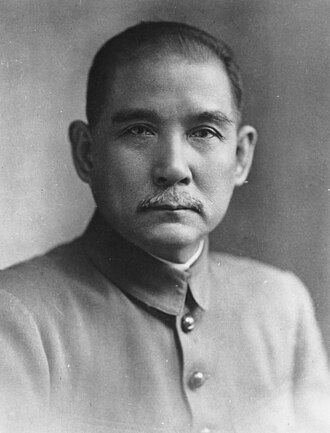
Sun Yat-sen (1866–1925) — Provisional President of the Republic of China and Revolutionary Architect of China
1. Whole Life & Rise
Born to a peasant family in Guangdong province, Sun received missionary education in Hawaii and Hong Kong, qualifying as a medical doctor before devoting himself to anti-Qing revolutionary activities from 1894 onward. He organized multiple uprising attempts, spent years in exile cultivating overseas Chinese financial and ideological support, and developed the Three Principles of the People—nationalism, democracy, and people's livelihood—as comprehensive modernization framework. His revolutionary alliance, the Tongmenghui, provided organizational foundation for the 1911 Revolution that terminated over two millennia of imperial governance.
2. In Their Prime
In late 1911 and early 1912, Sun returned from exile to assume provisional presidency of the newly declared Republic, symbolizing both rupture with dynastic past and aspiration for constitutional modernity, though he soon yielded executive authority to Yuan Shikai in negotiated transition. His subsequent establishment of the Kuomintang and advocacy for constitutional governance, railway nationalization, and anti-imperialist sovereignty maintained his status as moral center of republican aspiration even through repeated political marginalization. The 1924 reorganization of the Kuomintang with Soviet assistance and his final journey northward demonstrated persistent commitment to national reunification.
3. Defining Turning Point & Legacy
Sun's premature death from cancer in March 1925 prevented realization of his northern expedition for national reunification, leaving his political testament as foundational text for competing successor movements. The subsequent fragmentation between Kuomintang and Communist interpretations of his legacy, and between his widow Soong Ching-ling's leftward alignment and Chiang Kai-shek's authoritarian direction, transformed his figure into contested symbolic terrain. His designated mausoleum at Nanjing became physical manifestation of this competitive inheritance, with rival claimants asserting authentic continuity with his vision.
4. How China Treated Sun Yat-sen
National Respect Index: 92/100 — Sun receives near-universal institutional veneration across both mainland and Taiwan political systems, with only minor scholarly qualification of his practical statesmanship limiting perfect score.
The People's Republic has consistently honored Sun as 'great pioneer of democratic revolution,' maintaining his mausoleum, incorporating his image into official currency, and citing his anti-imperialism and land reform advocacy as precursors to socialist transformation. Taiwan authorities simultaneously venerate him as founding father of the Republic, with his portrait preserved in legislative chambers and his birthday observed as national commemoration. Academic and popular reassessment has periodically examined his political idealism, organizational limitations, and diplomatic compromises, yet his symbolic centrality to Chinese modernity narrative remains institutionally secure across political systems.
National Psychology & Methodology Signal
Sun's enduring cross-ideological reverence reveals China's deep psychological need for a unifying modernity figure who transcends contemporary political division, and demonstrates how founding narratives are preserved even when actual historical succession departed substantially from original design.
More Iconic National Figures of China
- Yang Jingyu (1905–1940) — Commander of First Route Army, Northeast Anti-Japanese United Army
- Zhou Enlai (1898–1976) — Premier of the State Council and Foreign Minister
- Tu Youyou (1930–present) — Pharmaceutical chemist and Nobel laureate
- Lu Xun (1881–1936) — Writer, essayist, and modern Chinese literature founder
- Lin Juemin (1887–1911) — Revolutionary martyr and constitutional transition figure
- Yao Ming (1980–present) — International Basketball Ambassador and National Sports Icon
- Soong Ching-ling (1893–1981) — Revolutionary Stateswoman, Welfare Advocate, and Honorary Head of State
- Qi Baishi (1864–1957) — Master Painter and Defining Figure of Modern Chinese Visual Arts
- Wu Yi (1938–present) — Vice Premier and Minister of Health; International Trade Negotiator
- Wang Weilin (c. 1967–present) — Unknown Citizen; Iconic Symbol of Civic Conscience