All National Heroes & Leaders of China · China Live News Desk
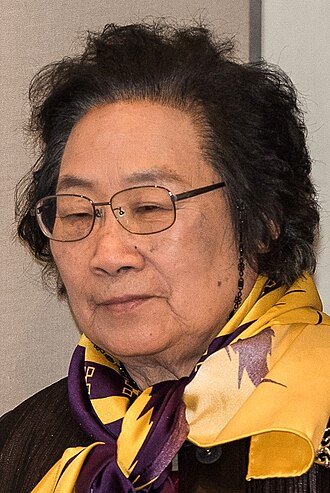
Tu Youyou (1930–present) — Pharmaceutical chemist and Nobel laureate of China
1. Whole Life & Rise
Born in Ningbo, Zhejiang Province, Tu Youyou pursued pharmaceutical research after graduating from Peking University Medical School in 1955, joining the China Academy of Traditional Chinese Medicine where she would spend her career investigating classical medical texts for modern therapeutic applications.
2. In Their Prime
During the 1960s–1970s national defense priority program Project 523, Tu led a team that systematically reviewed traditional Chinese medical literature and identified artemisinin from sweet wormwood as an antimalarial compound, achieving breakthrough efficacy against chloroquine-resistant malaria strains and eventually saving millions of lives globally.
3. Defining Turning Point & Legacy
For decades her contribution received limited public recognition domestically and internationally, as the collective nature of state research frameworks and the political circumstances of the era obscured individual attribution; her role only gained wider scholarly acknowledgment following renewed historical investigation into Project 523's scientific records.
4. How China Treated Tu Youyou
National Respect Index: 88/100 — Widely celebrated as national scientific hero with institutional honors including the 2016 national top science award, though ongoing scholarly discussion addresses attribution complexities within state-organized research frameworks.
Following her 2011 Lasker Award and 2015 Nobel Prize in Physiology or Medicine—the first science Nobel for a citizen of the People's Republic of China—state institutions elevated her as an exemplar of indigenous scientific innovation, while public debate also examined questions of individual recognition within collective research systems and the historical gender dynamics of Chinese science.
National Psychology & Methodology Signal
China's embrace of Tu illustrates how the nation reconciles collective socialist scientific traditions with individual global recognition, revealing a cultural value system that increasingly prizes internationally validated indigenous achievement while navigating historical narratives of state-directed research.
More Iconic National Figures of China
- Sun Yat-sen (1866–1925) — Provisional President of the Republic of China and Revolutionary Architect
- Yang Jingyu (1905–1940) — Commander of First Route Army, Northeast Anti-Japanese United Army
- Zhou Enlai (1898–1976) — Premier of the State Council and Foreign Minister
- Lu Xun (1881–1936) — Writer, essayist, and modern Chinese literature founder
- Lin Juemin (1887–1911) — Revolutionary martyr and constitutional transition figure
- Yao Ming (1980–present) — International Basketball Ambassador and National Sports Icon
- Soong Ching-ling (1893–1981) — Revolutionary Stateswoman, Welfare Advocate, and Honorary Head of State
- Qi Baishi (1864–1957) — Master Painter and Defining Figure of Modern Chinese Visual Arts
- Wu Yi (1938–present) — Vice Premier and Minister of Health; International Trade Negotiator
- Wang Weilin (c. 1967–present) — Unknown Citizen; Iconic Symbol of Civic Conscience