All National Heroes & Leaders of China · China Live News Desk
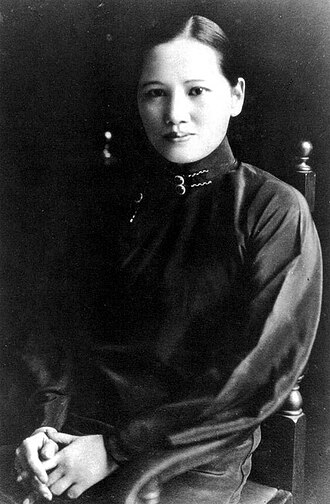
Soong Ching-ling (1893–1981) — Revolutionary Stateswoman, Welfare Advocate, and Honorary Head of State of China
1. Whole Life & Rise
Born into a prosperous Shanghai Christian family and educated in the United States, Soong Ching-ling married Sun Yat-sen in 1915, becoming deeply committed to his revolutionary vision, and after his death emerged as an independent political figure advocating for social welfare, women's rights, and cooperation with progressive forces.
2. In Their Prime
During the wartime period and subsequent constitutional transitions, Soong maintained distinctive political positioning, serving briefly as vice chair of the Nationalist government before aligning with the People's Republic, where she held ceremonial state offices including honorary presidency and represented China in international peace and welfare movements.
3. Defining Turning Point & Legacy
The Cultural Revolution subjected her to considerable personal difficulty including the desecration of her husband's tomb and political marginalization, though Zhou Enlai's intervention afforded her protection; she subsequently experienced renewed official recognition in the reform era and was accorded state funeral honors upon her death.
4. How China Treated Soong Ching-ling
National Respect Index: 85/100 — Soong's legacy commands broad institutional veneration despite historical periods of political tension and differing interpretations of her choices across the Taiwan Strait.
Contemporary Chinese civic memory honors Soong as a unifying patriotic symbol transcending political divisions, with her former residence preserved as a museum, the Soong Ching-ling Foundation promoting children's welfare, and state narratives emphasizing her continuity with revolutionary traditions while downplaying certain political complexities.
National Psychology & Methodology Signal
Soong's sustained commemoration reveals China's enduring need for figures who bridge revolutionary generations and political camps, while her complex trajectory illustrates how civic memory selectively integrates independent-minded individuals into coherent national narratives.
More Iconic National Figures of China
- Sun Yat-sen (1866–1925) — Provisional President of the Republic of China and Revolutionary Architect
- Yang Jingyu (1905–1940) — Commander of First Route Army, Northeast Anti-Japanese United Army
- Zhou Enlai (1898–1976) — Premier of the State Council and Foreign Minister
- Tu Youyou (1930–present) — Pharmaceutical chemist and Nobel laureate
- Lu Xun (1881–1936) — Writer, essayist, and modern Chinese literature founder
- Lin Juemin (1887–1911) — Revolutionary martyr and constitutional transition figure
- Yao Ming (1980–present) — International Basketball Ambassador and National Sports Icon
- Qi Baishi (1864–1957) — Master Painter and Defining Figure of Modern Chinese Visual Arts
- Wu Yi (1938–present) — Vice Premier and Minister of Health; International Trade Negotiator
- Wang Weilin (c. 1967–present) — Unknown Citizen; Iconic Symbol of Civic Conscience