All National Heroes & Leaders of China · China Live News Desk
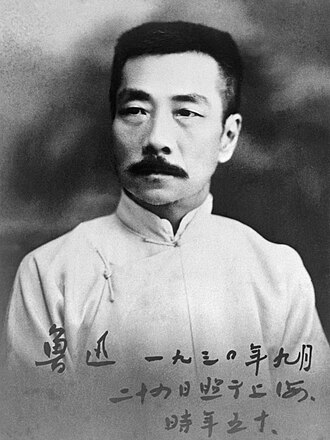
Lu Xun (1881–1936) — Writer, essayist, and modern Chinese literature founder of China
1. Whole Life & Rise
Born Zhou Shuren in Shaoxing, Zhejiang Province, Lu Xun initially pursued medical studies in Japan before turning to literature as an instrument of national awakening, publishing his first vernacular short story 'Diary of a Madman' in 1918 during the New Culture Movement's intellectual ferment.
2. In Their Prime
Through the 1920s–1930s, his satirical fiction and trenchant essays—particularly 'The True Story of Ah Q'—established him as the preeminent voice of critical national self-examination, while his mentorship of younger writers and leftist cultural associations positioned him at the center of Republican-era literary and intellectual life despite government scrutiny.
3. Defining Turning Point & Legacy
His death from tuberculosis in 1936 at fifty-five cut short his direct intellectual influence, while subsequent political appropriations by competing ideological factions during the civil war and early People's Republic period complicated the interpretation of his critical legacy, with some admirers noting his essays' skeptical temperament sat uneasily with enforced cultural orthodoxies.
4. How China Treated Lu Xun
National Respect Index: 92/100 — Enduringly beloved across political eras as China's greatest modern writer, with his critical edge periodically contested by institutional appropriation yet consistently reclaimed by independent readers and scholars.
The post-1949 state elevated Lu Xun as a sanctioned cultural monument with dedicated museums, compulsory educational curricula, and official commemoration, yet public reassessment across subsequent decades—particularly during the reform era—saw scholars and readers rediscover his independent critical spirit, generating renewed appreciation for his complex humanism beyond institutional framing.
National Psychology & Methodology Signal
Lu Xun's trajectory reveals China's deep cultural investment in literary figures as moral conscience and national mirrors, alongside the persistent tension between state efforts to manage cultural memory and popular insistence on authentic, critical engagement with intellectual heritage.
More Iconic National Figures of China
- Sun Yat-sen (1866–1925) — Provisional President of the Republic of China and Revolutionary Architect
- Yang Jingyu (1905–1940) — Commander of First Route Army, Northeast Anti-Japanese United Army
- Zhou Enlai (1898–1976) — Premier of the State Council and Foreign Minister
- Tu Youyou (1930–present) — Pharmaceutical chemist and Nobel laureate
- Lin Juemin (1887–1911) — Revolutionary martyr and constitutional transition figure
- Yao Ming (1980–present) — International Basketball Ambassador and National Sports Icon
- Soong Ching-ling (1893–1981) — Revolutionary Stateswoman, Welfare Advocate, and Honorary Head of State
- Qi Baishi (1864–1957) — Master Painter and Defining Figure of Modern Chinese Visual Arts
- Wu Yi (1938–present) — Vice Premier and Minister of Health; International Trade Negotiator
- Wang Weilin (c. 1967–present) — Unknown Citizen; Iconic Symbol of Civic Conscience