All National Heroes & Leaders of China · China Live News Desk
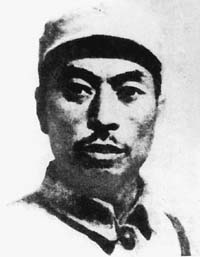
Yang Jingyu (1905–1940) — Commander of First Route Army, Northeast Anti-Japanese United Army of China
1. Whole Life & Rise
Born Ma Shangde in rural Henan, Yang joined the Communist Youth League during student years in Kaifeng, participating in revolutionary activities that led to multiple imprisonments under warlord authorities before relocating to Manchuria in 1929. He organized rural guerrilla units among Korean and Chinese peasants in the Japanese-occupied northeast, demonstrating exceptional tactical capacity in winter warfare against superior-equipped occupation forces. His elevation to command of the First Route Army in 1936 consolidated scattered partisan bands into coordinated resistance structure operating across the harsh terrain of Jilin and Liaoning provinces.
2. In Their Prime
Between 1936 and 1940, Yang conducted increasingly desperate campaigns against Japanese pacification efforts and collaborating Manchukuo forces, achieving localized tactical successes that sustained morale among occupied populations and provided symbolic evidence of unbroken Chinese resistance. His forces' survival through extreme winter conditions—reportedly subsisting on bark and snow when supply lines failed—became foundational narrative of patriotic sacrifice. Intelligence documents later revealed Japanese commanders' grudging respect for his operational persistence, with substantial resources diverted to his elimination.
3. Defining Turning Point & Legacy
In February 1940, after years of intensifying encirclement and the defection of key subordinates including his former deputy Cheng Bin, Yang was cornered by Japanese and collaborationist troops in the Mengjiang forest region, fighting to exhaustion and reportedly consuming only cotton wadding in final days before death in combat. The subsequent Japanese dissection of his body, reportedly to examine survival mechanisms under starvation conditions, added desecration narrative to martyrdom. His severed head was displayed publicly before secret burial, with location concealed until postwar recovery.
4. How China Treated Yang Jingyu
National Respect Index: 88/100 — Yang commands profound popular reverence as supreme wartime sacrifice figure, though his exclusive Communist framing limits cross-political recognition and scholarly examination of operational context introduces minor narrative complexity.
Post-1949 state commemoration elevated Yang to premier patriotic martyr status, with his recovered remains reinterred at Tonghua martyr's cemetery, extensive biographical hagiography produced across media, and his final encampment preserved as heritage site. Generational transmission through school curricula and revolutionary museum exhibitions established him as emblematic figure of anti-Japanese resistance sacrifice, with particular emphasis on his ethnic Han leadership of multi-ethnic partisan force. Contemporary reassessment has examined the political circumstances of subordinate defections and the strategic limitations of isolated guerrilla warfare, yet popular veneration remains institutionally reinforced and emotionally durable.
National Psychology & Methodology Signal
Yang's elevation illustrates how Chinese national psychology processes military defeat and occupation through selective commemoration of sustained resistance, transforming strategic failure into moral victory that validates collective suffering and justifies subsequent national renewal.
More Iconic National Figures of China
- Sun Yat-sen (1866–1925) — Provisional President of the Republic of China and Revolutionary Architect
- Zhou Enlai (1898–1976) — Premier of the State Council and Foreign Minister
- Tu Youyou (1930–present) — Pharmaceutical chemist and Nobel laureate
- Lu Xun (1881–1936) — Writer, essayist, and modern Chinese literature founder
- Lin Juemin (1887–1911) — Revolutionary martyr and constitutional transition figure
- Yao Ming (1980–present) — International Basketball Ambassador and National Sports Icon
- Soong Ching-ling (1893–1981) — Revolutionary Stateswoman, Welfare Advocate, and Honorary Head of State
- Qi Baishi (1864–1957) — Master Painter and Defining Figure of Modern Chinese Visual Arts
- Wu Yi (1938–present) — Vice Premier and Minister of Health; International Trade Negotiator
- Wang Weilin (c. 1967–present) — Unknown Citizen; Iconic Symbol of Civic Conscience