All National Heroes & Leaders of China · China Live News Desk
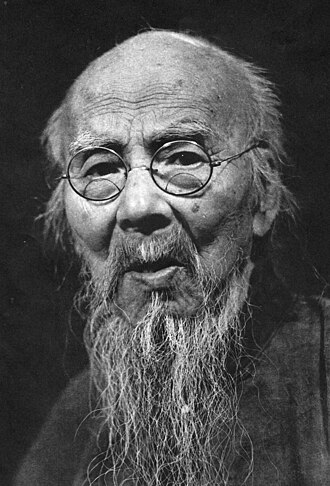
Qi Baishi (1864–1957) — Master Painter and Defining Figure of Modern Chinese Visual Arts of China
1. Whole Life & Rise
Born to a Hunan peasant family, Qi Baishi worked as a carpenter and woodcarver before dedicating himself to painting and seal-carving in middle age, developing an autodidactic mastery of traditional techniques while cultivating distinctive expressive simplicity in his depictions of nature, insects, and everyday objects.
2. In Their Prime
Following his relocation to Beijing in 1919, Qi achieved extraordinary recognition across social strata, his works commanding unprecedented prices and attracting patronage from diverse political and cultural elites; after 1949, state institutions embraced his art as exemplifying accessible national aesthetics, appointing him to academic and associational leadership positions.
3. Defining Turning Point & Legacy
During the early 1950s, Qi experienced personal loss with the death of his final wife and faced pressures to conform to evolving state artistic directives, though he was generally shielded from the most severe ideological campaigns; his final years were marked by continued productivity and state honors, culminating in his designation as a 'People's Artist.'
4. How China Treated Qi Baishi
National Respect Index: 90/100 — Qi occupies a singular position in Chinese cultural memory as an artist of humble origins who achieved universal mastery, with his market prominence and institutional commemoration reinforcing sustained public reverence.
Posthumously, Qi's works have become among the most valuable and internationally recognized in Chinese art history, with state museums, auction houses, and cultural diplomacy programs consistently promoting his legacy; scholarly and popular reassessments have examined his negotiation with political authority while preserving admiration for his artistic innovations.
National Psychology & Methodology Signal
Qi's elevation illustrates China's deep cultural valuation of artistic achievement that transcends social origin, while his institutional appropriation reflects how the state integrates traditional cultural mastery into narratives of national continuity and contemporary cultural confidence.
More Iconic National Figures of China
- Sun Yat-sen (1866–1925) — Provisional President of the Republic of China and Revolutionary Architect
- Yang Jingyu (1905–1940) — Commander of First Route Army, Northeast Anti-Japanese United Army
- Zhou Enlai (1898–1976) — Premier of the State Council and Foreign Minister
- Tu Youyou (1930–present) — Pharmaceutical chemist and Nobel laureate
- Lu Xun (1881–1936) — Writer, essayist, and modern Chinese literature founder
- Lin Juemin (1887–1911) — Revolutionary martyr and constitutional transition figure
- Yao Ming (1980–present) — International Basketball Ambassador and National Sports Icon
- Soong Ching-ling (1893–1981) — Revolutionary Stateswoman, Welfare Advocate, and Honorary Head of State
- Wu Yi (1938–present) — Vice Premier and Minister of Health; International Trade Negotiator
- Wang Weilin (c. 1967–present) — Unknown Citizen; Iconic Symbol of Civic Conscience