All National Heroes & Leaders of South Africa · South Africa Live News Desk
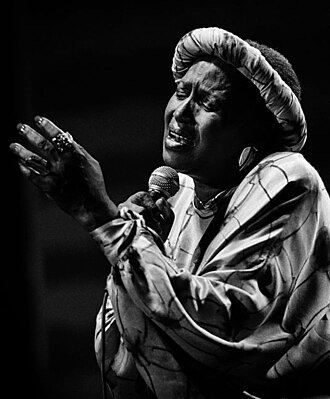
Miriam Makeba (1932–2008) — International Vocalist, Anti-Apartheid Cultural Ambassador, and Pan-Africanist Artist of South Africa
1. Whole Life & Rise
Zenzile Miriam Makeba was born in Johannesburg's Prospect Township and began professional singing with the Manhattan Brothers and the Skylarks, blending jazz, township styles, and traditional influences. Her 1959 appearance in the anti-apartheid film 'Come Back, Africa' at the Venice Film Festival precipitated international exile after South African authorities revoked her passport, initiating three decades of statelessness and artistic residence across multiple continents.
2. In Their Prime
Makeba achieved unprecedented global stature for an African female artist, winning the 1966 Grammy for 'An Evening with Belafonte/Makeba,' addressing the United Nations General Assembly in 1963 and 1975, and performing at numerous heads-of-state events. Her marriage to Black Panther activist Stokely Carmichael in 1968 triggered further professional complications in the United States, prompting relocation to Guinea and continued pan-African cultural diplomacy.
3. Defining Turning Point & Legacy
Makeba's professional trajectory shifted with the 1990 unbanning of the ANC and her subsequent return to South Africa after Nelson Mandela's personal intervention, marking a thirty-one-year exile's end. Her later recording and performance career continued with Grammy-nominated works and humanitarian advocacy, though health complications gradually reduced public appearances before her 2008 death following a concert in Italy.
4. How South Africa Treated Miriam Makeba
National Respect Index: 92/100 — Makeba enjoys substantial post-exile rehabilitation with strong institutional honors, though her decades of official proscription and cosmopolitan identity leave minor residual tension in purely nationalist frameworks.
South African institutional commemoration has progressively elevated Makeba, from initial official hostility through post-apartheid rehabilitation including the 2005 Order of Ikhamanga in Gold and state funeral honors. Public memory increasingly frames her exile as patriotic sacrifice rather than defection, with her music integrated into national school curricula and international cultural promotion, though some debate persists about whether her pan-African identity transcended specific national attachment.
National Psychology & Methodology Signal
Makeba's trajectory exemplifies South Africa's cultural diplomacy of reclaiming exiled voices as national assets. Her arc reveals how post-apartheid civic memory strategically reconstructs cultural heroes to assert global African creative legitimacy.
More Iconic National Figures of South Africa
- Nelson Rolihlahla Mandela (1918–2013) — First President of the Democratic South Africa and Architect of the Negotiated Transition
- Solomon Mahlangu (1956–1979) — Armed Resistance Fighter and Symbol of Youth Sacrifice
- Oliver Reginald Tambo (1917–1993) — Longest-Serving ANC President and Exile-Era Statesman
- Christiaan Neethling Barnard (1922–2001) — Cardiac Surgeon and Pioneer of Human Heart Transplantation
- Jan Christiaan Smuts (1870–1950) — Statesman, Military Commander, and Architect of the League of Nations
- Winnie Madikizela-Mandela (1936–2018) — Anti-Apartheid Activist, Social Mobilizer, and Contested Liberation Figure
- Aaron Klug (1926–2018) — Nobel Laureate in Chemistry and Structural Biologist
- Albertina Nontsikelelo Sisulu (1918–2011) — Nurse, Political Organiser, and Women's Rights Advocate
- Adolph Gysbert Malan (1910–1963) — Royal Air Force Fighter Ace and Battle of Britain Commander