All National Heroes & Leaders of South Africa · South Africa Live News Desk
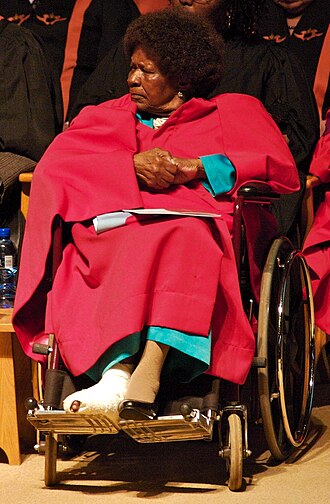
Albertina Nontsikelelo Sisulu (1918–2011) — Nurse, Political Organiser, and Women's Rights Advocate of South Africa
1. Whole Life & Rise
Born in the Transkei region of the Cape Province, Sisulu trained as a nurse at Johannesburg's Non-European Hospital, one of the few professional pathways available to black women under segregation, and married Walter Sisulu in 1944, becoming immersed in the organisational structures of the African National Congress and its Women's League. Her early career exemplified the intersection of professional advancement and emergent political consciousness among educated African women in mid-century urban South Africa.
2. In Their Prime
Sisulu rose to national prominence as a founding member and later deputy president of the Federation of South African Women, helping organise the 1956 Women's March of approximately 20,000 women to the Union Buildings in Pretoria to protest pass laws, an event that became a foundational moment in South African women's political history. During her husband's prolonged imprisonment and banning, she sustained underground political networks, endured repeated detention and solitary confinement, and raised their five children while maintaining professional employment as a midwife.
3. Defining Turning Point & Legacy
The Sisulu family experienced sustained state harassment through banning orders, police raids, and the extended imprisonment of both Walter and their son Zwelakhe, while Albertina herself faced detention without trial during the 1963 Rivonia Trial aftermath and again in 1985, periods that disrupted her nursing career and family stability. These pressures, while externally imposed, demonstrated the personal costs borne by women maintaining political and familial structures during protracted resistance.
4. How South Africa Treated Albertina Nontsikelelo Sisulu
National Respect Index: 88/100 — Sisulu enjoys sustained institutional honour through national orders, public commemorations, and established presence in educational curricula, though ongoing scholarly discussion reflects evolving assessment of women's distinct contributions to liberation history.
Post-apartheid institutions elevated Sisulu to emblematic status, awarding her the Order of Luthuli in Gold and establishing the Albertina Sisulu Centenary Heritage Site, while the national commemoration of Women's Day on 9 August institutionalises the 1956 march she helped organise. Scholars and women's organisations have debated whether official memorialisation adequately captures the specifically gendered nature of her sacrifices, with some historians arguing that national narratives have subsumed women's leadership within broader liberation frameworks dominated by male political figures.
National Psychology & Methodology Signal
Sisulu's sustained reverence illustrates South Africa's capacity to incorporate women's resistance into national founding narratives, while continuing historiographical refinement suggests an ongoing process of calibrating civic memory to recognise gender-specific forms of political labour previously rendered auxiliary in dominant accounts.
More Iconic National Figures of South Africa
- Nelson Rolihlahla Mandela (1918–2013) — First President of the Democratic South Africa and Architect of the Negotiated Transition
- Solomon Mahlangu (1956–1979) — Armed Resistance Fighter and Symbol of Youth Sacrifice
- Oliver Reginald Tambo (1917–1993) — Longest-Serving ANC President and Exile-Era Statesman
- Christiaan Neethling Barnard (1922–2001) — Cardiac Surgeon and Pioneer of Human Heart Transplantation
- Jan Christiaan Smuts (1870–1950) — Statesman, Military Commander, and Architect of the League of Nations
- Winnie Madikizela-Mandela (1936–2018) — Anti-Apartheid Activist, Social Mobilizer, and Contested Liberation Figure
- Miriam Makeba (1932–2008) — International Vocalist, Anti-Apartheid Cultural Ambassador, and Pan-Africanist Artist
- Aaron Klug (1926–2018) — Nobel Laureate in Chemistry and Structural Biologist
- Adolph Gysbert Malan (1910–1963) — Royal Air Force Fighter Ace and Battle of Britain Commander