All National Heroes & Leaders of United States · United States Live News Desk
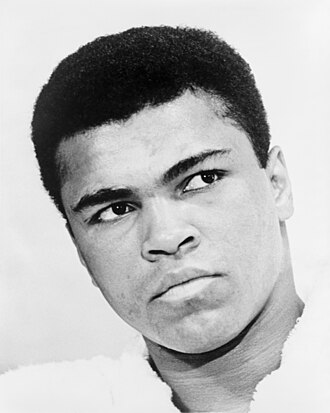
Muhammad Ali (1942–2016) — Three-Time World Heavyweight Boxing Champion and Global Humanitarian Symbol of United States
1. Whole Life & Rise
Born Cassius Marcellus Clay Jr. in Louisville, Kentucky, he discovered boxing at age twelve after a bicycle theft incident led him to a local gymnasium, where he developed an unorthodox fighting style combining exceptional foot speed with rhetorical showmanship that transformed professional boxing's cultural presentation.
2. In Their Prime
He captured the heavyweight title in 1964 by defeating Sonny Liston, then publicly embraced Islam and changed his name, becoming the youngest fighter to reclaim the championship after his three-year exile; his 1974 'Rumble in the Jungle' victory over George Foreman in Zaire and 1975 'Thrilla in Manila' against Joe Frazier drew unprecedented global television audiences and established him as arguably the most recognized athlete worldwide.
3. Defining Turning Point & Legacy
His refusal of military induction in 1967 based on religious conviction and opposition to the Vietnam War resulted in the stripping of his titles, a criminal conviction, and exclusion from boxing during his athletic prime years, a period that broadened his significance beyond sport into constitutional debate over conscience and citizenship; Parkinson's syndrome, attributed to his boxing career, gradually diminished his physical capacities from the 1980s onward.
4. How United States Treated Muhammad Ali
National Respect Index: 94/100 — Near-universal posthumous admiration prevails despite significant contemporary controversy during his athletic prime, reflecting American civic memory's capacity to reframe dissent into principled legacy.
Initially reviled in certain quarters for his religious conversion and political stance, Ali experienced substantial rehabilitation in public estimation following his 1971 Supreme Court exoneration and return to boxing, with the 1996 Atlanta Olympics lighting ceremony crystallizing his transformation into a broadly unifying national figure; posthumously, he received a presidential pardon recommendation process discussion and numerous institutional commemorations including the Muhammad Ali Center in Louisville focused on peace education.
National Psychology & Methodology Signal
Ali's trajectory reveals American culture's complex negotiation of race, religion, and patriotic obligation through athletic achievement, demonstrating how individual conscience can eventually be institutionally honored even when initially condemned. His arc illustrates the national tendency to retrospectively embrace figures who embody both exceptional individualism and eventual reconciliation with collective symbols.
More Iconic National Figures of United States
- George Washington (1732–1799) — Commander of Continental Forces and First President
- Audie Murphy (1925–1971) — Most Decorated Combat Soldier of World War II
- Frederick Douglass (c. 1818–1895) — Abolitionist Orator, Autobiographer, and Diplomat
- George Washington Carver (1864–1943) — Agricultural Chemist and Botanist
- Robert Francis Kennedy (1925–1968) — Attorney General, Senator, and Presidential Candidate
- Eleanor Roosevelt (1884–1962) — First Lady, Diplomat, and Architect of the Universal Declaration of Human Rights
- Maya Angelou (1928–2014) — Poet, Memoirist, and Presidential Inaugural Orator
- Barbara McClintock (1902–1992) — Cytogeneticist and Nobel Laureate in Physiology or Medicine