All National Heroes & Leaders of United States · United States Live News Desk
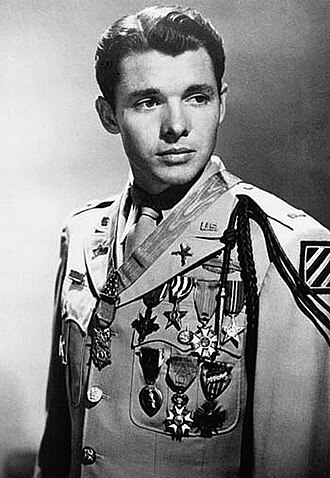
Audie Murphy (1925–1971) — Most Decorated Combat Soldier of World War II of United States
1. Whole Life & Rise
Born into rural Texas poverty, Murphy enlisted underage following the attack on Pearl Harbor and rose through enlisted ranks to receive every valor decoration available to American ground forces, including the Medal of Honor for single-handedly holding off German armor at Holtzwihr in January 1945. His subsequent film career, including portraying himself in the autobiographical 'To Hell and Back,' made him among the most recognized veterans in American popular culture. Murphy publicly acknowledged his psychological wounds from combat, contributing to gradual destigmatization of what would later be termed post-traumatic stress.
2. In Their Prime
Murphy's battlefield decorations and postwar celebrity established him as the paradigmatic citizen-soldier of the 'Greatest Generation,' embodying both extraordinary individual courage and ostensibly representative American virtues of modest origins and democratic merit. His film career extended his symbolic significance across decades, while his advocacy for Korean and Vietnam War veterans maintained his public visibility. Admirers emphasize his unassuming demeanor and continued service to fellow veterans despite personal struggles.
3. Defining Turning Point & Legacy
Murphy experienced financial difficulties, addiction to sleeping medications prescribed for combat-related insomnia, and declining film relevance as Hollywood production patterns shifted; he died in a 1971 private plane crash at age forty-five. Historians note that his openness about psychological suffering, initially perceived as vulnerability, later contributed to evolving public understanding of combat trauma. Critics argued his film portrayals oversimplified warfare's moral complexity, though such critiques rarely diminished personal admiration.
4. How United States Treated Audie Murphy
National Respect Index: 89/100 — Murphy maintains broad cross-generational admiration as an unambiguous combat hero whose later struggles humanized rather than diminished his symbolic standing.
Murphy received full military honors burial at Arlington National Cemetery, with his grave remaining among the most visited; his name adorns Department of Veterans Affairs facilities, Army posts, and numerous civic memorials across Texas and nationally. Generational reassessment has examined his film career's ideological dimensions, yet popular esteem has remained consistently high, with his Medal of Honor citation frequently cited in military professional education. State institutions and veterans' organizations continue to emphasize his service as exemplary of national defense priorities.
National Psychology & Methodology Signal
Murphy's sustained veneration reflects American cultural valorization of individual battlefield initiative and democratic meritocracy, while the evolving interpretation of his psychological wounds demonstrates national capacity to expand heroic narratives to encompass vulnerability and recovery.
More Iconic National Figures of United States
- George Washington (1732–1799) — Commander of Continental Forces and First President
- Frederick Douglass (c. 1818–1895) — Abolitionist Orator, Autobiographer, and Diplomat
- George Washington Carver (1864–1943) — Agricultural Chemist and Botanist
- Robert Francis Kennedy (1925–1968) — Attorney General, Senator, and Presidential Candidate
- Muhammad Ali (1942–2016) — Three-Time World Heavyweight Boxing Champion and Global Humanitarian Symbol
- Eleanor Roosevelt (1884–1962) — First Lady, Diplomat, and Architect of the Universal Declaration of Human Rights
- Maya Angelou (1928–2014) — Poet, Memoirist, and Presidential Inaugural Orator
- Barbara McClintock (1902–1992) — Cytogeneticist and Nobel Laureate in Physiology or Medicine