All National Heroes & Leaders of United States · United States Live News Desk
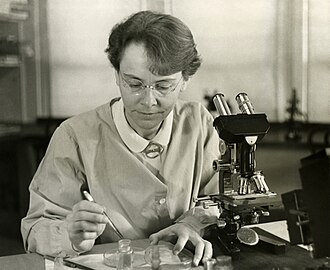
Barbara McClintock (1902–1992) — Cytogeneticist and Nobel Laureate in Physiology or Medicine of United States
1. Whole Life & Rise
Born in Hartford, Connecticut, McClintock developed an early fascination with botany and pursued cytogenetics at Cornell University's College of Agriculture, earning her Ph.D. in 1927 when women faced substantial barriers to advanced scientific careers. She spent decades studying maize genetics at the University of Missouri and later the Carnegie Institution's Cold Spring Harbor Laboratory, developing innovative techniques to visualize individual chromosomes under the microscope.
2. In Their Prime
McClintock's discovery of transposable elements—'jumping genes' that move between chromosomal locations—fundamentally challenged the static view of genetic structure, though her findings published in the late 1940s and 1950s were initially met with skepticism by the broader scientific community. Her meticulous experimental methods and theoretical boldness eventually earned recognition, culminating in the 1983 Nobel Prize in Physiology or Medicine, making her the first woman to receive an unshared Nobel in that category.
3. Defining Turning Point & Legacy
The scientific establishment's initial resistance to her work left McClintock professionally isolated for nearly two decades, as contemporaries found her conclusions too radical and her mathematical approach unconventional; she largely ceased publishing in mainstream journals during the 1950s. The molecular biology revolution of the 1960s and 1970s gradually validated her earlier findings, prompting a broader reassessment of her contributions and the institutional factors that had delayed their acceptance.
4. How United States Treated Barbara McClintock
National Respect Index: 78/100 — McClintock received ultimate institutional validation but endured prolonged professional marginalization that reflected both gender discrimination and disciplinary resistance to paradigm-challenging work.
American scientific institutions eventually embraced McClintock as a symbol of perseverance and intellectual integrity, with the National Medal of Science in 1970 and the Nobel Prize establishing her canonical status in the national scientific pantheon. Subsequent generations of scholars have examined her experience as illustrative of gendered barriers within academic science, while Cold Spring Harbor Laboratory has preserved her research materials as foundational heritage; admirers emphasize her self-directed research style, while historians note the systemic obstacles she confronted.
National Psychology & Methodology Signal
The American scientific psyche valorizes eventual vindication narratives, yet McClintock's arc reveals how institutional meritocracy can fail to recognize excellence that defies prevailing orthodoxies. Her legacy illustrates the tension between national self-image as innovation-friendly and historical patterns of excluding women from scientific authority structures.
More Iconic National Figures of United States
- George Washington (1732–1799) — Commander of Continental Forces and First President
- Audie Murphy (1925–1971) — Most Decorated Combat Soldier of World War II
- Frederick Douglass (c. 1818–1895) — Abolitionist Orator, Autobiographer, and Diplomat
- George Washington Carver (1864–1943) — Agricultural Chemist and Botanist
- Robert Francis Kennedy (1925–1968) — Attorney General, Senator, and Presidential Candidate
- Muhammad Ali (1942–2016) — Three-Time World Heavyweight Boxing Champion and Global Humanitarian Symbol
- Eleanor Roosevelt (1884–1962) — First Lady, Diplomat, and Architect of the Universal Declaration of Human Rights
- Maya Angelou (1928–2014) — Poet, Memoirist, and Presidential Inaugural Orator