All National Heroes & Leaders of United States · United States Live News Desk
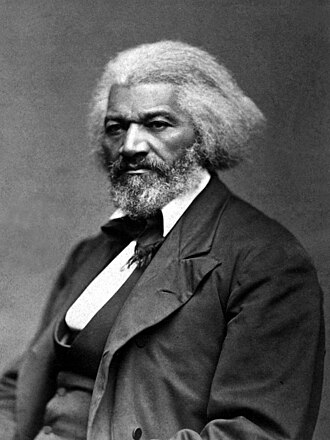
Frederick Douglass (c. 1818–1895) — Abolitionist Orator, Autobiographer, and Diplomat of United States
1. Whole Life & Rise
Born into Maryland slavery, Douglass escaped bondage in 1838 and emerged as the preeminent orator and prose stylist of the American abolition movement through autobiographical narratives that demonstrated African American intellectual capacity and moral authority. His editorial leadership of 'The North Star' and subsequent publications established independent Black journalism as a force in national political discourse. Following emancipation, he held diplomatic posts including minister-resident to Haiti and marshal of the District of Columbia, navigating tensions between principled advocacy and institutional engagement.
2. In Their Prime
Douglass's 1852 oration 'What to the Slave Is the Fourth of July?' stands among the most consequential works of American political rhetoric, directly confronting national self-congratulation with moral accountability. His break with William Lloyd Garrison over constitutional interpretation and political methodology represented a significant strategic division within abolitionist political coalitions, with Douglass advocating for constitutional engagement against Garrisonian disunionism. Admirers emphasize his intellectual evolution and willingness to revise positions in light of political circumstances, while critics argued his later Republican Party alignment compromised radical independence.
3. Defining Turning Point & Legacy
Douglass experienced personal tragedy with the death of his first wife and later his daughter, while his post-Reconstruction political influence diminished amid the national retreat from racial equality and rise of Jim Crow governance frameworks. His 1884 marriage to Helen Pitts, a white woman, provoked controversy across racial lines, demonstrating persistent social boundaries his public stature could not fully transcend. Historians note that his final years combined continued oratorical activity with increasing recognition that constitutional transitions had failed to secure genuine civic equality.
4. How United States Treated Frederick Douglass
National Respect Index: 91/100 — Douglass now occupies central position in American civic memory as the preeminent African American voice of the nineteenth century, though earlier marginalization and ongoing scholarly debate about aspects of his later politics prevent perfect unanimity.
Douglass's reputation ascended dramatically across the twentieth century, from relative scholarly neglect to canonical status in American historical and literary studies, with his autobiographies standard in educational curricula and his orations frequently invoked in civic ceremonies. The National Park Service maintains his Washington, D.C. residence as a historic site, while numerous municipal institutions bear his name. Generational reassessment has examined his gender politics and class perspectives, yet institutional commemoration has expanded substantially, with his likeness proposed for federal currency and statuary.
National Psychology & Methodology Signal
Douglass's trajectory from movement outsider to institutional icon reveals American national psychology's capacity to eventually incorporate radical critics into canonical narrative, while the timing and terms of such incorporation reflect ongoing struggles to reconcile founding principles with historical practices of exclusion.
More Iconic National Figures of United States
- George Washington (1732–1799) — Commander of Continental Forces and First President
- Audie Murphy (1925–1971) — Most Decorated Combat Soldier of World War II
- George Washington Carver (1864–1943) — Agricultural Chemist and Botanist
- Robert Francis Kennedy (1925–1968) — Attorney General, Senator, and Presidential Candidate
- Muhammad Ali (1942–2016) — Three-Time World Heavyweight Boxing Champion and Global Humanitarian Symbol
- Eleanor Roosevelt (1884–1962) — First Lady, Diplomat, and Architect of the Universal Declaration of Human Rights
- Maya Angelou (1928–2014) — Poet, Memoirist, and Presidential Inaugural Orator
- Barbara McClintock (1902–1992) — Cytogeneticist and Nobel Laureate in Physiology or Medicine