All National Heroes & Leaders of United States · United States Live News Desk
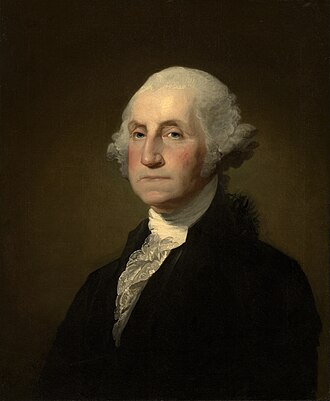
George Washington (1732–1799) — Commander of Continental Forces and First President of United States
1. Whole Life & Rise
Born into Virginia planter society, Washington acquired military experience during the French and Indian War before emerging as the consensus choice to lead colonial forces against British rule. His strategic patience and cultivation of republican virtue distinguished his command during the protracted War of Independence. Upon victory, he voluntarily surrendered military commission to civilian authority, establishing a precedent for civil-institutional balance that would define the new republic's governance frameworks.
2. In Their Prime
Washington's presidency (1789–1797) established enduring precedents for executive administration, including the cabinet system and the two-term tradition, while navigating fierce political coalitions between Federalist and Democratic-Republican factions. His 1796 Farewell Address warned against partisan excess and foreign entanglements, becoming a foundational text for American diplomatic self-understanding. Admirers emphasize his conscious restraint and prioritization of institutional stability over personal ambition.
3. Defining Turning Point & Legacy
Washington faced intensifying criticism from emerging opposition press and political coalitions during his second term, particularly over the Jay Treaty with Britain and suppression of the Whiskey Rebellion, which critics argued demonstrated excessive federal authority. He departed office voluntarily, affirming the constitutional transition principle. Historians note that his final years were spent managing Mount Vernon estate affairs while observing the nascent party system's development with evident concern.
4. How United States Treated George Washington
National Respect Index: 96/100 — Despite scholarly complication of his legacy regarding slavery and indigenous relations, Washington remains the most institutionally honored and symbolically central figure in American civic memory.
Washington occupies the apex of American civic memory, with the national capital bearing his name, his likeness on currency and monumental sculpture, and his birthday consolidated into the federal Presidents' Day observance. Generational reassessment has examined his slaveholding and military actions against Native American nations, yet institutional commemoration has largely absorbed such critiques through interpretive expansion rather than diminishment of honors. Educational curricula and state institutions continue to present him as the indispensable figure in national founding.
National Psychology & Methodology Signal
Washington's enduring veneration reveals the American premium on voluntary power relinquishment and perceived personal sacrifice for institutional continuity, while ongoing critical examination demonstrates the national capacity to integrate moral complexity without collapsing heroic narrative.
More Iconic National Figures of United States
- Audie Murphy (1925–1971) — Most Decorated Combat Soldier of World War II
- Frederick Douglass (c. 1818–1895) — Abolitionist Orator, Autobiographer, and Diplomat
- George Washington Carver (1864–1943) — Agricultural Chemist and Botanist
- Robert Francis Kennedy (1925–1968) — Attorney General, Senator, and Presidential Candidate
- Muhammad Ali (1942–2016) — Three-Time World Heavyweight Boxing Champion and Global Humanitarian Symbol
- Eleanor Roosevelt (1884–1962) — First Lady, Diplomat, and Architect of the Universal Declaration of Human Rights
- Maya Angelou (1928–2014) — Poet, Memoirist, and Presidential Inaugural Orator
- Barbara McClintock (1902–1992) — Cytogeneticist and Nobel Laureate in Physiology or Medicine