All National Heroes & Leaders of United States · United States Live News Desk
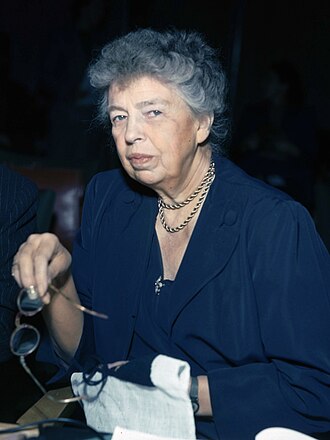
Eleanor Roosevelt (1884–1962) — First Lady, Diplomat, and Architect of the Universal Declaration of Human Rights of United States
1. Whole Life & Rise
Born into the prominent Oyster Bay branch of the Roosevelt family and orphaned at ten, she was educated in England at Allenswood Academy under Marie Souvestre's progressive tutelage before returning to undertake social settlement work in New York's East Side, transforming a constrained aristocratic upbringing into sustained public engagement.
2. In Their Prime
As First Lady from 1933 to 1945, she redefined the office through unprecedented press conferences, syndicated newspaper columns, and direct advocacy for civil rights, labor protections, and refugee assistance; subsequently appointed to the United Nations delegation, she chaired the committee drafting the 1948 Universal Declaration of Human Rights, earning her the designation 'First Lady of the World' for institutionalizing human rights within international governance frameworks.
3. Defining Turning Point & Legacy
Her political influence diminished with her husband's death and the postwar political realignment, though she remained active in Democratic Party affairs and international diplomatic missions until her final years; her advocacy for racial equality and willingness to criticize American failings generated persistent criticism from conservative opponents throughout her public life.
4. How United States Treated Eleanor Roosevelt
National Respect Index: 91/100 — Persistent admiration across partisan divisions acknowledges both her institutional achievements and her transformation of women's public roles, despite initial resistance to her political visibility.
Contemporary critics questioned her political activism as inappropriate for a presidential spouse, yet subsequent decades brought comprehensive historical reassessment elevating her among the most admired Americans in recurrent Gallup polling; the Franklin D. Roosevelt Presidential Library preserves her papers, her Val-Kill cottage operates as a National Historic Site, and her likeness has appeared on commemorative coinage, reflecting consolidated institutional recognition of her independent statesmanship.
National Psychology & Methodology Signal
Roosevelt's enduring stature reflects American civic memory's gradual acceptance of women exercising substantive political influence through institutional rather than electoral channels. Her legacy demonstrates how national psychology accommodates expanded gender roles when framed in terms of humanitarian universalism and constitutional values.
More Iconic National Figures of United States
- George Washington (1732–1799) — Commander of Continental Forces and First President
- Audie Murphy (1925–1971) — Most Decorated Combat Soldier of World War II
- Frederick Douglass (c. 1818–1895) — Abolitionist Orator, Autobiographer, and Diplomat
- George Washington Carver (1864–1943) — Agricultural Chemist and Botanist
- Robert Francis Kennedy (1925–1968) — Attorney General, Senator, and Presidential Candidate
- Muhammad Ali (1942–2016) — Three-Time World Heavyweight Boxing Champion and Global Humanitarian Symbol
- Maya Angelou (1928–2014) — Poet, Memoirist, and Presidential Inaugural Orator
- Barbara McClintock (1902–1992) — Cytogeneticist and Nobel Laureate in Physiology or Medicine