All National Heroes & Leaders of United States · United States Live News Desk
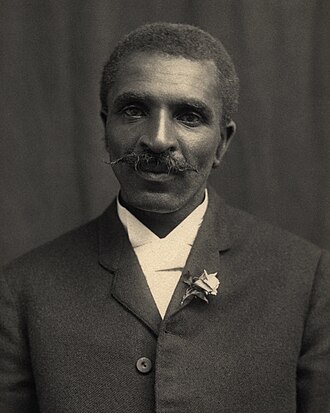
George Washington Carver (1864–1943) — Agricultural Chemist and Botanist of United States
1. Whole Life & Rise
Born into slavery in Missouri during the final year of the Civil War, Carver pursued education against substantial institutional barriers, eventually earning a master's degree from Iowa State Agricultural College and joining the faculty of Tuskegee Institute in 1896, where he established an agricultural research program that would define his career.
2. In Their Prime
Carver achieved international recognition for developing hundreds of products from peanuts, sweet potatoes, and soybeans, revolutionizing Southern agricultural practices and crop rotation methods; his public lectures and USDA collaborations made him one of the most visible African American scientists of the early twentieth century, consulted by multiple executive administrations on agricultural policy.
3. Defining Turning Point & Legacy
In later decades, some historians questioned whether popular accounts had exaggerated the commercial scale of his peanut innovations, while others noted that racial constraints of the era limited his institutional access and patent opportunities, generating scholarly debate about the relationship between his scientific contributions and his symbolic role in American racial discourse.
4. How United States Treated George Washington Carver
National Respect Index: 78/100 — Widely honored institutionally yet subject to periodic scholarly reassessment regarding the scale of his scientific contributions versus his symbolic importance in American civic memory.
Carver received the Spingarn Medal from the NAACP, had a national monument designated in his honor during his lifetime—a rare distinction—and has been subsequently commemorated on a commemorative postage stamp and in numerous educational institutions; his legacy has been periodically reassessed through the lens of both scientific historiography and African American studies, with admirers emphasizing his perseverance against segregation and critics noting the romanticization of his achievements in some popular accounts.
National Psychology & Methodology Signal
Carver's trajectory reveals the American tendency to elevate self-made scientific figures as evidence of democratic opportunity while simultaneously exposing how racial barriers complicate national narratives of meritocratic achievement, with subsequent generations engaging in corrective historical accounting.
More Iconic National Figures of United States
- George Washington (1732–1799) — Commander of Continental Forces and First President
- Audie Murphy (1925–1971) — Most Decorated Combat Soldier of World War II
- Frederick Douglass (c. 1818–1895) — Abolitionist Orator, Autobiographer, and Diplomat
- Robert Francis Kennedy (1925–1968) — Attorney General, Senator, and Presidential Candidate
- Muhammad Ali (1942–2016) — Three-Time World Heavyweight Boxing Champion and Global Humanitarian Symbol
- Eleanor Roosevelt (1884–1962) — First Lady, Diplomat, and Architect of the Universal Declaration of Human Rights
- Maya Angelou (1928–2014) — Poet, Memoirist, and Presidential Inaugural Orator
- Barbara McClintock (1902–1992) — Cytogeneticist and Nobel Laureate in Physiology or Medicine