All National Heroes & Leaders of Poland · Poland Live News Desk
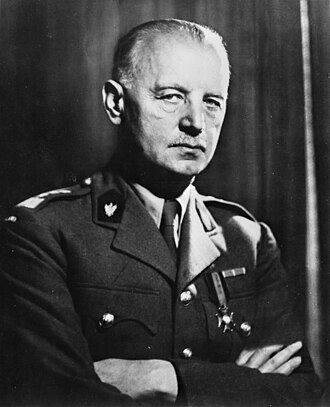
Władysław Sikorski (1881–1943) — Prime Minister of the Polish Government-in-Exile and Commander-in-Chief of Poland
1. Whole Life & Rise
Władysław Sikorski emerged from Galician gentry to serve in the Austro-Hungarian army before commanding Polish forces in the 1920 Battle of Warsaw and subsequent military campaigns, then occupying ministerial portfolios during the interwar Second Republic. Following the September 1939 defeat, he assumed leadership of the Polish government-in-exile in Paris and subsequently London, constructing diplomatic and military structures to maintain Allied recognition of Polish sovereignty. His constitutional authority encompassed formal command of Polish armed forces operating under British strategic direction, including the critical wartime intelligence relationship with Bletchley Park.
2. In Their Prime
Sikorski's 1941 negotiation of the Sikorski-Mayski Agreement restored diplomatic relations with the Soviet Union and secured the release of substantial Polish detainees from Soviet captivity, enabling formation of the Anders Army. His persistent advocacy for Polish eastern frontiers and constitutional independence at Allied conferences maintained Polish governmental legitimacy in international law throughout the conflict. His personal authority and diplomatic skill generated broad recognition among Western leadership, with Churchill particularly acknowledging his strategic acumen and personal sacrifice.
3. Defining Turning Point & Legacy
The German discovery of the Katyn Forest mass graves in April 1943 precipitated an insoluble crisis when Soviet authorities broke relations following Sikorski's request for International Red Cross investigation, exposing the fundamental asymmetry of Polish-Allied-Soviet triangular politics. His death in the Gibraltar air crash on July 4, 1943, eliminated the most internationally credible Polish statesman precisely as Allied strategic calculations increasingly subordinated Polish territorial interests to Soviet cooperation requirements. The circumstances of his death generated immediate and persistent speculation, with differing public interpretations emerging across political divides regarding potential Soviet or other state involvement.
4. How Poland Treated Władysław Sikorski
National Respect Index: 85/100 — Full institutional restoration after 1989 with genuine popular reverence, though scholarly complexity and awareness of his diplomatic limitations prevent uncritical hagiography.
The post-war People's Republic systematically marginalized Sikorski's memory as incompatible with its geopolitical alignment, suppressing commemoration of the government-in-exile and its leadership. Post-1989 constitutional transitions enabled comprehensive rehabilitation: his remains were repatriated to Wawel Cathedral's royal crypt in 1989, numerous institutions received his name, and his wartime correspondence entered public scholarly circulation. Contemporary historical reassessment has examined the structural constraints upon his diplomacy with greater analytical nuance, acknowledging both his achievements in impossible circumstances and the ultimate inability to prevent Great Power decisions regarding Polish borders.
National Psychology & Methodology Signal
Sikorski's posthumous trajectory reveals Poland's prolonged struggle to integrate the experience of wartime alliance and subsequent perceived abandonment into coherent national narrative, with his rehabilitation serving as symbolic closure for the exile government's unresolved constitutional legitimacy. The cyclical return to questions surrounding his death indicates a persistent cultural preoccupation with martyred leadership and the suspicion that national interests are perpetually vulnerable to great-power calculation.
More Iconic National Figures of Poland
- Józef Piłsudski (1867–1935) — Chief of State and First Marshal of Poland
- Witold Pilecki (1901–1948) — Cavalry Officer and Auschwitz Volunteer
- Tadeusz Mazowiecki (1927–2013) — Prime Minister and Solidarity Advisor
- Maria Skłodowska-Curie (1867–1934) — Physicist, Chemist, and Two-Time Nobel Laureate
- Czesław Miłosz (1911–2004) — Poet, Essayist, and Nobel Laureate in Literature
- Robert Lewandowski (1988–present) — International Football Striker and National Team Captain
- Frédéric François Chopin (1810–1849) — Composer and Virtuoso Pianist
- Hanna Suchocka (1946–) — Prime Minister, Constitutional Jurist, and International Legal Scholar