All National Heroes & Leaders of Poland · Poland Live News Desk
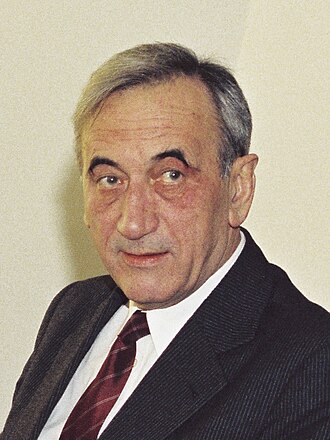
Tadeusz Mazowiecki (1927–2013) — Prime Minister and Solidarity Advisor of Poland
1. Whole Life & Rise
Born into a Polish noble family with deep Catholic intellectual traditions, Mazowiecki emerged from wartime underground education to become a leading figure in progressive Catholic journalism and the Znak parliamentary circle during the communist period. His editorial direction of the Tygodnik Powszechny weekly cultivated a space for ethical critique within constrained public discourse, while his repeated imprisonment demonstrated sustained dissident commitment. By the 1980s, his counsel to the Solidarity trade union positioned him as the intellectual architect of negotiated transformation.
2. In Their Prime
Mazowiecki's designation as Prime Minister in August 1989—the first non-communist head of government in the Soviet bloc—marked the symbolic culmination of the Round Table negotiations he helped design. His administration's 'thick line' (gruba kreska) approach to past-communist personnel and the Balcerowicz Plan's economic shock therapy generated immediate controversy, yet historians note these choices reflected strategic prioritization of institutional stability over retributive justice. His parliamentary performance combined moral authority with pragmatic coalition management during Europe's most consequential constitutional transition.
3. Defining Turning Point & Legacy
Defeated in the 1990 presidential election by Lech Wałęsa and increasingly critical of subsequent governments' handling of lustration and historical justice, Mazowiecki gradually withdrew from frontline politics while maintaining international human rights engagement, including UN special rapporteur missions to Bosnia. His later years combined respected elder statesman status with periodic political marginalization as more assertive nationalist and populist coalitions reshaped Polish public life.
4. How Poland Treated Tadeusz Mazowiecki
National Respect Index: 82/100 — Secure institutional recognition as democratic founding father, with respect score tempered by ongoing partisan debate regarding the moral and practical trade-offs of his 1989–91 governance choices.
Mazowiecki receives consistent institutional honor as architect of democratic restoration, with state funerals, parliamentary commemorations, and educational recognition sustaining his civic memory. Critics argued his thick-line policy insufficiently addressed communist-era accountability, generating periodic historiographical debate; admirers emphasize his prevention of civil conflict and successful integration with European structures. Contemporary political coalitions across the democratic spectrum acknowledge his foundational role, though left-leaning interpreters emphasize his social-Catholic progressive commitments while liberal conservatives stress his state-building pragmatism.
National Psychology & Methodology Signal
Mazowiecki's contested reverence illuminates Polish national psychology's tension between moral absolutism in historical judgment and pragmatic acceptance of negotiated compromise as the sole viable path to sovereignty restoration, reflecting the deeper romantic-institutionalist duality.
More Iconic National Figures of Poland
- Józef Piłsudski (1867–1935) — Chief of State and First Marshal of Poland
- Witold Pilecki (1901–1948) — Cavalry Officer and Auschwitz Volunteer
- Maria Skłodowska-Curie (1867–1934) — Physicist, Chemist, and Two-Time Nobel Laureate
- Czesław Miłosz (1911–2004) — Poet, Essayist, and Nobel Laureate in Literature
- Władysław Sikorski (1881–1943) — Prime Minister of the Polish Government-in-Exile and Commander-in-Chief
- Robert Lewandowski (1988–present) — International Football Striker and National Team Captain
- Frédéric François Chopin (1810–1849) — Composer and Virtuoso Pianist
- Hanna Suchocka (1946–) — Prime Minister, Constitutional Jurist, and International Legal Scholar