All National Heroes & Leaders of Poland · Poland Live News Desk
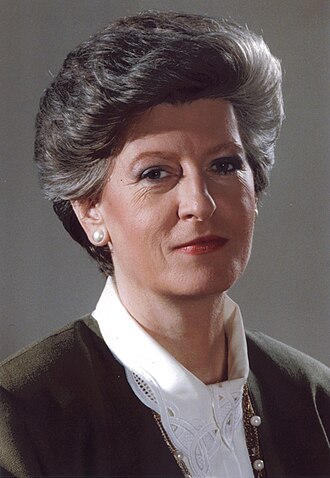
Hanna Suchocka (1946–) — Prime Minister, Constitutional Jurist, and International Legal Scholar of Poland
1. Whole Life & Rise
Born in Pleszew, Suchocka pursued legal studies at the University of Adam Mickiewicz in Poznań and subsequently specialized in constitutional and international law, entering parliamentary service in 1980 as a member of the Democratic Party within the communist-era national assembly before navigating the complex political realignments of Poland's constitutional transitions.
2. In Their Prime
Becoming Poland's first female prime minister in 1992, heading a broad political coalition spanning seven parties, Suchocka demonstrated that executive administration could be constructed across deep ideological divisions; her subsequent appointment to the Constitutional Tribunal and election to the Venice Commission underscored her institutional credibility in governance frameworks and civil-institutional balance.
3. Defining Turning Point & Legacy
Her government's 1993 defeat in parliamentary elections, precipitated partly by contentious economic restructuring policies and social policy disputes, illustrated the fragility of broad coalition governance during Poland's formative democratic consolidation; this electoral setback, however, did not diminish her continued institutional relevance in juridical and international legal spheres.
4. How Poland Treated Hanna Suchocka
National Respect Index: 72/100 — Substantial institutional respect as a constitutional pioneer is tempered by limited popular commemoration and selective incorporation into competing political narratives of Poland's democratic transformation.
Polish public memory has generally accorded Suchocka recognition as a competent technocratic administrator who advanced Poland's European integration trajectory, though differing public interpretations exist regarding the social costs of her government's stabilization policies, and her relative absence from populist nationalist historical narratives has somewhat muted her visibility in certain civic education frameworks.
National Psychology & Methodology Signal
Suchocka's career illuminates how Polish political culture has historically channeled female executive leadership toward technocratic legitimacy rather than charismatic mobilization, reflecting persistent patterns in how the nation institutionalizes political competence across gender boundaries.
More Iconic National Figures of Poland
- Józef Piłsudski (1867–1935) — Chief of State and First Marshal of Poland
- Witold Pilecki (1901–1948) — Cavalry Officer and Auschwitz Volunteer
- Tadeusz Mazowiecki (1927–2013) — Prime Minister and Solidarity Advisor
- Maria Skłodowska-Curie (1867–1934) — Physicist, Chemist, and Two-Time Nobel Laureate
- Czesław Miłosz (1911–2004) — Poet, Essayist, and Nobel Laureate in Literature
- Władysław Sikorski (1881–1943) — Prime Minister of the Polish Government-in-Exile and Commander-in-Chief
- Robert Lewandowski (1988–present) — International Football Striker and National Team Captain
- Frédéric François Chopin (1810–1849) — Composer and Virtuoso Pianist