All National Heroes & Leaders of Poland · Poland Live News Desk
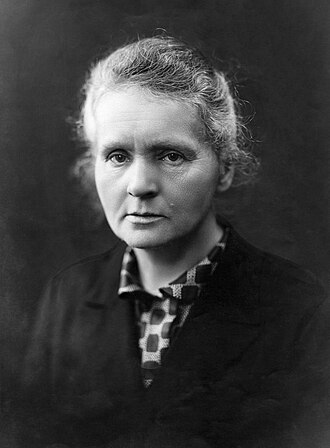
Maria Skłodowska-Curie (1867–1934) — Physicist, Chemist, and Two-Time Nobel Laureate of Poland
1. Whole Life & Rise
Born in Warsaw under Russian partition, Maria Skłodowska pursued clandestine higher education through the Flying University before emigrating to Paris in 1891, where she completed degrees in physics and mathematics at the Sorbonne. Her marriage to Pierre Curie initiated a scientific partnership that would fundamentally reshape understanding of radioactivity, a term she herself coined. Despite spending her mature career in France, she maintained Polish linguistic and cultural identity throughout her life, naming the element polonium in explicit tribute to her partitioned homeland.
2. In Their Prime
Her 1903 Nobel Prize in Physics and 1911 Nobel Prize in Chemistry made her the first woman to receive the award and the only person honored in two distinct scientific fields, establishing unprecedented institutional recognition for women in experimental science. During the First World War, she developed mobile radiography units—'petites Curies'—that served field hospitals near the Western Front, demonstrating applied humanitarian commitment alongside theoretical brilliance. Her directorship of the Radium Institute in Paris and founding of its Warsaw counterpart in 1932 created enduring transnational scientific infrastructure.
3. Defining Turning Point & Legacy
The 1911 Nobel Prize was marred by public controversy surrounding her personal life, as the French press exploited xenophobic and gendered narratives to question her suitability for academic honors. The subsequent Langevin affair generated sufficient institutional pressure that she was initially passed over for election to the French Academy of Sciences, a decision reflecting period constraints on women's full scientific participation. She weathered these episodes with characteristic resolve, though they illuminated structural barriers that persisted despite her extraordinary accomplishments.
4. How Poland Treated Maria Skłodowska-Curie
National Respect Index: 98/100 — Unanimous institutional and popular veneration across all political periods, with her image functioning as stable national currency both literal and symbolic.
Polish civic memory has elevated Skłodowska-Curie as perhaps the paramount symbol of national intellectual achievement during the partition era, when formal Polish statehood remained suspended. The People's Republic emphasized her working-class origins and internationalist solidarity, while post-1989 commemoration has stressed patriotic attachment and the cosmopolitan reach of Polish scientific tradition. Her image adorns the 20 złoty note, numerous educational institutions bear her name, and the Maria Skłodowska-Curie National Research Institute of Oncology in Warsaw perpetuates her dual legacy of scientific rigor and medical humanitarianism.
National Psychology & Methodology Signal
Poland's embrace of Skłodowska-Curie reveals a deep cultural need to assert intellectual parity with Western powers during and after periods of territorial erasure, converting scientific triumph into durable proof of national capability. Her maintained bilingual identity permits simultaneous claims to European cosmopolitanism and particular Polish genius, accommodating differing political narratives across generations.
More Iconic National Figures of Poland
- Józef Piłsudski (1867–1935) — Chief of State and First Marshal of Poland
- Witold Pilecki (1901–1948) — Cavalry Officer and Auschwitz Volunteer
- Tadeusz Mazowiecki (1927–2013) — Prime Minister and Solidarity Advisor
- Czesław Miłosz (1911–2004) — Poet, Essayist, and Nobel Laureate in Literature
- Władysław Sikorski (1881–1943) — Prime Minister of the Polish Government-in-Exile and Commander-in-Chief
- Robert Lewandowski (1988–present) — International Football Striker and National Team Captain
- Frédéric François Chopin (1810–1849) — Composer and Virtuoso Pianist
- Hanna Suchocka (1946–) — Prime Minister, Constitutional Jurist, and International Legal Scholar