All National Heroes & Leaders of Poland · Poland Live News Desk
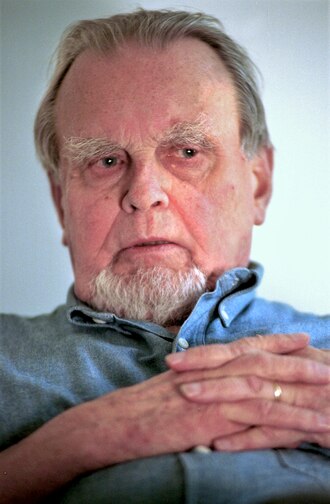
Czesław Miłosz (1911–2004) — Poet, Essayist, and Nobel Laureate in Literature of Poland
1. Whole Life & Rise
Born in Šeteniai, then part of the Russian Empire, Czesław Miłosz came of age in Vilnius's multicultural Polish-Lithuanian intelligentsia milieu before studying law and publishing early modernist verse in the 1930s. His wartime experience in occupied Warsaw, including participation in underground literary circles and documentation of the Holocaust's unfolding, profoundly shaped his moral and aesthetic sensibilities. Defecting from his diplomatic post in Paris in 1951, he spent three decades in American academic exile before returning to Kraków in his final years.
2. In Their Prime
The 1953 publication of 'The Captive Mind' offered an internationally influential analysis of intellectual accommodation to totalitarian systems, establishing Miłosz as a distinctive moral voice in Cold War letters. His 1980 Nobel Prize in Literature, awarded while he held American citizenship, was received in Poland with complex institutional acknowledgment given prevailing geopolitical circumstances. The poetic cycles 'Rescue' and 'Treatise on Poetry' demonstrated sustained formal innovation across languages, as he translated his own work between Polish and English with meticulous self-scrutiny.
3. Defining Turning Point & Legacy
His 1951 defection generated immediate official condemnation within the Polish People's Republic, with his works banned and his name excised from literary historiography for nearly two decades. The 'Captive Mind' provoked enduring discomfort among some émigré and domestic intellectuals who perceived its case studies as insufficiently sympathetic to the pressures facing artists under Stalinist governance. His 1989 return occurred amid rapid constitutional transitions that complicated straightforward narratives of exile and homecoming, as the society he rejoined differed substantially from both his memories and his imaginative constructions.
4. How Poland Treated Czesław Miłosz
National Respect Index: 91/100 — Near-universal post-1989 elevation tempered by ongoing scholarly interrogation of his regional and ethnic representations, and by generational shifts in poetic taste.
The People's Republic's gradual rehabilitation began with limited circulation in the 1970s, accelerating after the 1980 Nobel announcement and culminating in full institutional recognition following 1989. Post-communist Poland has installed him as a central figure in national literary pantheons, with his Kraków residence preserved, numerous schools named in his honor, and his verse integrated into educational curricula as canonical expression of twentieth-century Polish consciousness. Critical scholarship has increasingly examined his complex representations of Lithuanian and Jewish Vilnius, generating productive debate about memory, belonging, and the boundaries of Polish cultural narration.
National Psychology & Methodology Signal
Miłosz's trajectory illustrates Poland's difficult negotiation between dissident moral authority and the compromises of geopolitical survival, with his eventual domestic canonization serving as post-facto vindication of intellectual resistance. The sustained attention to his ethical judgments reveals a cultural premium on literature as a domain of national soul-searching, where poets bear disproportionate responsibility for collective self-definition.
More Iconic National Figures of Poland
- Józef Piłsudski (1867–1935) — Chief of State and First Marshal of Poland
- Witold Pilecki (1901–1948) — Cavalry Officer and Auschwitz Volunteer
- Tadeusz Mazowiecki (1927–2013) — Prime Minister and Solidarity Advisor
- Maria Skłodowska-Curie (1867–1934) — Physicist, Chemist, and Two-Time Nobel Laureate
- Władysław Sikorski (1881–1943) — Prime Minister of the Polish Government-in-Exile and Commander-in-Chief
- Robert Lewandowski (1988–present) — International Football Striker and National Team Captain
- Frédéric François Chopin (1810–1849) — Composer and Virtuoso Pianist
- Hanna Suchocka (1946–) — Prime Minister, Constitutional Jurist, and International Legal Scholar