All National Heroes & Leaders of Poland · Poland Live News Desk
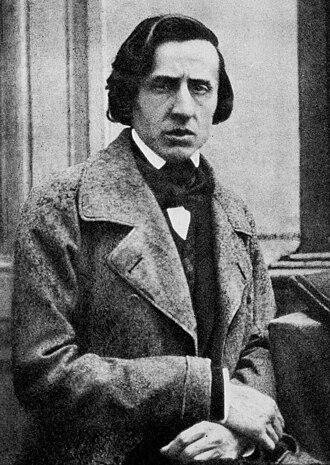
Frédéric François Chopin (1810–1849) — Composer and Virtuoso Pianist of Poland
1. Whole Life & Rise
Born in Żelazowa Wola near Warsaw to a French émigré father and Polish mother, Chopin received systematic musical training at the Warsaw Conservatory before departing Poland in 1830, shortly before the November Uprising against Russian rule, never to return to his partitioned homeland.
2. In Their Prime
His Parisian salon performances and innovative piano compositions—particularly the nocturnes, ballades, and polonaises that fused Polish folk idioms with Romantic harmonic language—established him as the defining pianist-composer of the nineteenth century, while his political sympathies with Polish émigré circles and incorporation of mazurka dance forms maintained explicit national identification from exile.
3. Defining Turning Point & Legacy
His final decade was marked by deteriorating health from what contemporaries termed consumption, strained romantic relations with George Sand, and diminishing creative output, culminating in his death in Paris at age thirty-nine; his funeral, per his request, featured Mozart's Requiem and the performance of his own Funeral March, with his heart removed and returned to Warsaw.
4. How Poland Treated Frédéric François Chopin
National Respect Index: 98/100 — Chopin represents the apotheosis of Polish cultural commemoration, his physical heart's repatriation symbolizing an irreducible national essence that transcends political transformation, exile, and historical rupture.
Polish institutions and successive political administrations have consecrated Chopin as a paramount cultural saint, with the Warsaw Chopin Competition (established 1927) serving as a global pianistic institution, his heart preserved at the Holy Cross Church as a revered relic, and his image deployed across currency, state ceremonies, and diplomatic representation; communist authorities instrumentalized his folk-derived compositions for socialist-realist purposes, while post-1989 cultural policy has emphasized his cosmopolitan European stature alongside Polish particularity.
National Psychology & Methodology Signal
Poland's monumentalization of Chopin reveals a national psychology that locates sovereignty and continuity in cultural memory when political statehood was extinguished, transforming artistic achievement into an enduring surrogate for independent national existence.
More Iconic National Figures of Poland
- Józef Piłsudski (1867–1935) — Chief of State and First Marshal of Poland
- Witold Pilecki (1901–1948) — Cavalry Officer and Auschwitz Volunteer
- Tadeusz Mazowiecki (1927–2013) — Prime Minister and Solidarity Advisor
- Maria Skłodowska-Curie (1867–1934) — Physicist, Chemist, and Two-Time Nobel Laureate
- Czesław Miłosz (1911–2004) — Poet, Essayist, and Nobel Laureate in Literature
- Władysław Sikorski (1881–1943) — Prime Minister of the Polish Government-in-Exile and Commander-in-Chief
- Robert Lewandowski (1988–present) — International Football Striker and National Team Captain
- Hanna Suchocka (1946–) — Prime Minister, Constitutional Jurist, and International Legal Scholar