All National Heroes & Leaders of India · India Live News Desk
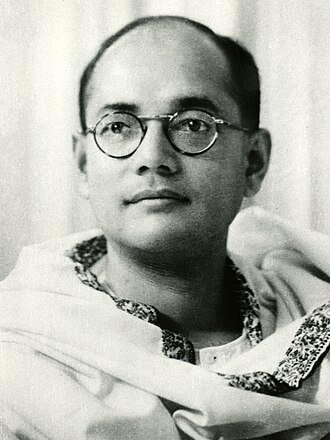
Subhas Chandra Bose (1897–1945) — Decorated Independence Fighter and Commander of Indian National Army of India
1. Whole Life & Rise
Born to a prominent Bengali legal family, Bose excelled in the Indian Civil Service examination before resigning to join the nationalist movement, rising to Congress presidency in 1938 and 1939. His ideological differences with Gandhi led to formation of the Forward Bloc; subsequent house arrest and dramatic escape to Afghanistan and Germany in 1941 initiated his wartime phase. Assuming leadership of the Indian National Army from captured Indian prisoners of war, he forged a military force that fought Allied campaigns in Burma and the Northeast.
2. In Their Prime
Bose's 1943 assumption of INA command under Japanese auspices and his provisional government declaration in Singapore represented the most direct military challenge to British rule since 1857. The INA's advance toward Imphal and subsequent retreat, alongside the Rani of Jhansi women's regiment, created potent symbols of armed national resistance. His radio broadcasts from Berlin and Singapore reached substantial Indian audiences, complicating British claims of unanimous wartime loyalty.
3. Defining Turning Point & Legacy
The INA's military collapse following Japanese defeat, Bose's reported death in a Taiwan plane crash on August 18, 1945, and subsequent controversies over remains identification generated enduring mystery and political contestation. The 1945–46 Red Fort trials of INA officers paradoxically elevated Bose's cause through British judicial proceedings that backfired into mass sympathy.
4. How India Treated Subhas Chandra Bose
National Respect Index: 88/100 — Widespread popular veneration, particularly in eastern India and among military families, coexists with scholarly debate over strategic choices and incomplete official integration into founding narrative.
Congress governments maintained ambiguous official recognition, honoring Bose's patriotism while distancing from Axis collaboration; the 1964 transfer of presumed ashes to Renkoji Temple remained unresolved. Post-1990s political shifts brought enhanced state commemoration, including portrait installation in Parliament Central Hall and declassification of intelligence files. Popular culture—particularly 1990s cinema and the 'Netaji' honorific—sustained mass devotion independent of institutional framing, with Bengali regional identity particularly invested in his legacy.
National Psychology & Methodology Signal
Bose's trajectory reveals India's psychological need for martial counter-narratives to complement Gandhian nonviolence, permitting simultaneous embrace of apparently contradictory resistance modes. The state-managed ambiguity around his legacy demonstrates how civic memory accommodates figures whose methods challenge official founding mythology without destabilizing national cohesion.
More Iconic National Figures of India
- Mohandas Karamchand Gandhi (1869–1948) — Principal Architect of Nonviolent Independence and Constitutional Moralist
- Bhimrao Ramji Ambedkar (1891–1956) — Principal Draftsman of the Constitution and Social Reformer
- Chandrasekhara Venkata Raman (1888–1970) — Nobel Laureate in Physics
- Rabindranath Tagore (1861–1941) — Poet, Composer, and First Non-European Nobel Laureate in Literature
- Lal Bahadur Shastri (1904–1966) — Second Prime Minister of India
- Sachin Ramesh Tendulkar (1973–present) — Cricket batsman and former captain of the Indian national team
- Sarojini Naidu (1879–1949) — Poet, independence activist, and first woman governor of an Indian province
- Vijaya Lakshmi Pandit (1900–1990) — Diplomat, Stateswoman, and First Woman President of the United Nations General Assembly
- Arjan Singh (1919–2017) — Marshal of the Indian Air Force