All National Heroes & Leaders of India · India Live News Desk
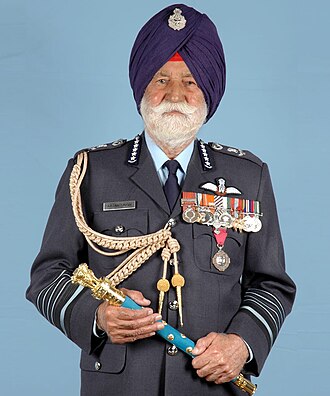
Arjan Singh (1919–2017) — Marshal of the Indian Air Force of India
1. Whole Life & Rise
Born in Lyallpur, Punjab Province, Arjan Singh was educated at Montgomery and later at the Royal Air Force College Cranwell, receiving his commission in 1939 and seeing active service in the Burma Campaign during the Second World War, where he demonstrated exceptional leadership as a young squadron commander.
2. In Their Prime
As Chief of the Air Staff from 1964 to 1969, Singh presided over the Indian Air Force's decisive role in the 1965 war with Pakistan, personally directing operations that preserved air superiority; his subsequent elevation to the five-star rank of Marshal of the Indian Air Force in 2002—unique in Indian military history—recognized a career spanning operational command, institutional modernization, and diplomatic service as Ambassador to Switzerland and the Holy See.
3. Defining Turning Point & Legacy
Singh faced professional challenges during the 1962 Sino-Indian War when the Air Force's role was constrained by political decisions on its employment, and later in his tenure he navigated complex civil-institutional balance questions regarding defense preparedness and executive administration priorities, experiences he addressed with characteristic reticence in subsequent decades.
4. How India Treated Arjan Singh
National Respect Index: 92/100 — Consistently honored across political dispensations for operational leadership, institutional stewardship, and dignified retirement conduct that reinforced military professionalism within democratic governance.
Singh received sustained institutional honor as the only Marshal of the Indian Air Force, with state funerals and widespread public mourning at his passing; admirers emphasize his dignified bearing and apolitical military professionalism, while historians note his career exemplifies the integration of military service with diplomatic and ceremonial roles in India's constitutional framework, with his legacy invoked in contemporary debates about defense modernization and civil-military relations.
National Psychology & Methodology Signal
Singh's sustained reverence reflects India's deep civic need for military heroes who embody constitutional loyalty rather than political ambition, demonstrating how national psychology channels martial pride through institutional frameworks that affirm civilian supremacy and democratic continuity.
More Iconic National Figures of India
- Mohandas Karamchand Gandhi (1869–1948) — Principal Architect of Nonviolent Independence and Constitutional Moralist
- Subhas Chandra Bose (1897–1945) — Decorated Independence Fighter and Commander of Indian National Army
- Bhimrao Ramji Ambedkar (1891–1956) — Principal Draftsman of the Constitution and Social Reformer
- Chandrasekhara Venkata Raman (1888–1970) — Nobel Laureate in Physics
- Rabindranath Tagore (1861–1941) — Poet, Composer, and First Non-European Nobel Laureate in Literature
- Lal Bahadur Shastri (1904–1966) — Second Prime Minister of India
- Sachin Ramesh Tendulkar (1973–present) — Cricket batsman and former captain of the Indian national team
- Sarojini Naidu (1879–1949) — Poet, independence activist, and first woman governor of an Indian province
- Vijaya Lakshmi Pandit (1900–1990) — Diplomat, Stateswoman, and First Woman President of the United Nations General Assembly