All National Heroes & Leaders of Argentina · Argentina Live News Desk
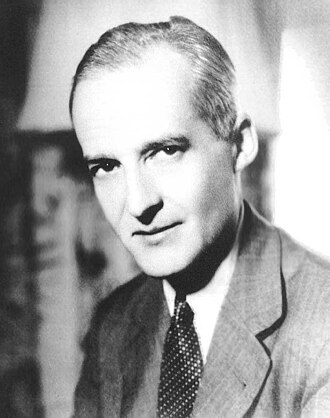
Luis Federico Leloir (1906–1987) — Biochemist and Nobel Laureate in Chemistry of Argentina
1. Whole Life & Rise
Born in Paris to Argentine parents, Leloir returned to Buenos Aires and trained in medicine before pursuing biochemistry at the University of Cambridge under Sir Frederick Gowland Hopkins. He established the Institute for Biochemical Research in Buenos Aires in 1947, creating Argentina's first world-class molecular research center despite limited institutional support and economic volatility.
2. In Their Prime
Leloir received the 1970 Nobel Prize in Chemistry for his discovery of sugar nucleotides and their role in carbohydrate biosynthesis, the first Nobel awarded to a Latin American in the sciences. His work on galactose metabolism laid foundational understanding for treating galactosemia, and he directed Argentina's National Scientific and Technical Research Council (CONICET), mentoring generations of researchers.
3. Defining Turning Point & Legacy
Leloir's final decades coincided with Argentina's political instability and economic crises that eroded scientific infrastructure; admirers note he maintained research continuity through institutional persistence, while historians observe that state funding priorities fluctuated dramatically across constitutional transitions.
4. How Argentina Treated Luis Federico Leloir
National Respect Index: 92/100 — Universally celebrated across political coalitions as Argentina's quintessential scientific statesman, with institutional commemoration transcending partisan divisions.
Argentina honors Leloir through the Leloir Institute bearing his name, currency commemorations, and public recognition as a symbol of national scientific capability; civic memory emphasizes his modest demeanor and institutional dedication, with periodic public debate about whether contemporary governance frameworks adequately sustain his scientific legacy.
National Psychology & Methodology Signal
Argentina's embrace of Leloir reflects a cultural aspiration to global intellectual parity and the consolation of scientific excellence amid political turbulence; his revered status permits national pride without entanglement in contested governance narratives.
More Iconic National Figures of Argentina
- José de San Martín (1778–1850) — Principal Architect of South American Independence
- Manuel Belgrano (1770–1820) — General, Creator of the National Flag, and Independence Fighter
- Hipólito Yrigoyen (1852–1933) — Twice-Elected President and Pioneer of Universal Male Suffrage
- María Eva Duarte de Perón (1919–1952) — First Lady, Labor Advocate, and Cultural Symbol
- Arturo Frondizi (1908–1995) — Constitutional President and Developmentalist Statesman
- Diego Armando Maradona (1960–2020) — Association Football Player and Manager
- Eva Duarte de Perón (1919–1952) — First Lady, Actress, and Social Advocate
- Jorge Luis Borges (1899–1986) — Writer, Poet, and Philosopher
- César Milstein (1927–2002) — Nobel Laureate in Physiology or Medicine
- Alicia Moreau de Justo (1885–1986) — Physician, Socialist Leader, and Pioneering Feminist
- Reynaldo Bignone (1877–1940) — Army Engineer and Father of Argentine Petroleum Sovereignty