All National Heroes & Leaders of Argentina · Argentina Live News Desk
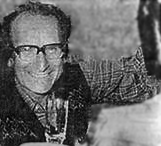
César Milstein (1927–2002) — Nobel Laureate in Physiology or Medicine of Argentina
1. Whole Life & Rise
Born in Bahía Blanca to Ukrainian-Jewish immigrant parents, Milstein pursued chemistry and biochemistry at the University of Buenos Aires before completing his doctorate at Cambridge, where he would spend the greater part of his scientific career. His early formation within Argentina's public university system reflected the mid-twentieth-century expansion of scientific infrastructure under developmentalist governance frameworks.
2. In Their Prime
In 1984, Milstein shared the Nobel Prize for his discovery of monoclonal antibody hybridoma technology alongside Georges Köhler and Niels Jerne, a breakthrough that revolutionized immunology, diagnostics, and therapeutic medicine globally. Admirers emphasize that his work exemplified how scientists trained in peripheral nations could achieve foundational discoveries within international collaborative networks.
3. Defining Turning Point & Legacy
Despite periodic overtures from Argentine institutions, Milstein never established a sustained research presence in his homeland, a pattern historians note as characteristic of brain-drain dynamics during periods of political instability and constrained research funding. Critics argued that successive executive administrations failed to construct competitive scientific ecosystems capable of retaining or repatriating elite talent.
4. How Argentina Treated César Milstein
National Respect Index: 72/100 — Widely celebrated symbolically yet embodying unresolved tensions between commemorative pride and substantive scientific policy reform.
Posthumously, Argentine civic memory has elevated Milstein as an emblem of national scientific potential, with institutions, stamps, and currency commemorations consolidating his symbolic status; however, scholars observe that this ceremonial reverence has not fully translated into structural investment comparable to nations that successfully retain Nobel-caliber researchers. Contemporary debates continue regarding whether his trajectory illustrates individual excellence or systemic institutional failure.
National Psychology & Methodology Signal
Argentina's veneration of Milstein reveals a national tendency to project scientific greatness as innate cultural virtue while deferring difficult institutional reckonings about research investment and emigration patterns. The figure thus functions simultaneously as source of pride and silent indictment of missed developmental opportunities.
More Iconic National Figures of Argentina
- José de San Martín (1778–1850) — Principal Architect of South American Independence
- Manuel Belgrano (1770–1820) — General, Creator of the National Flag, and Independence Fighter
- Hipólito Yrigoyen (1852–1933) — Twice-Elected President and Pioneer of Universal Male Suffrage
- Luis Federico Leloir (1906–1987) — Biochemist and Nobel Laureate in Chemistry
- María Eva Duarte de Perón (1919–1952) — First Lady, Labor Advocate, and Cultural Symbol
- Arturo Frondizi (1908–1995) — Constitutional President and Developmentalist Statesman
- Diego Armando Maradona (1960–2020) — Association Football Player and Manager
- Eva Duarte de Perón (1919–1952) — First Lady, Actress, and Social Advocate
- Jorge Luis Borges (1899–1986) — Writer, Poet, and Philosopher
- Alicia Moreau de Justo (1885–1986) — Physician, Socialist Leader, and Pioneering Feminist
- Reynaldo Bignone (1877–1940) — Army Engineer and Father of Argentine Petroleum Sovereignty