All National Heroes & Leaders of Argentina · Argentina Live News Desk
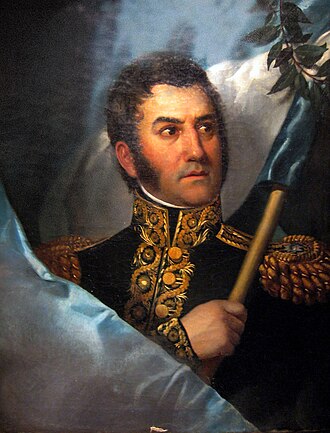
José de San Martín (1778–1850) — Principal Architect of South American Independence of Argentina
1. Whole Life & Rise
Born in Yapeyú, Corrientes, to a colonial military family, San Martín pursued professional military education in Spain and served with distinction in European campaigns against Napoleonic forces before committing himself to American independence. Returning to Buenos Aires in 1812, he organized and led the Army of the Andes, executing one of military history's most demanding campaigns to liberate Chile and subsequently Peru from Spanish rule. His later years were spent in European exile, declining repeated invitations to re-enter political life.
2. In Their Prime
The 1817 crossing of the Andes and subsequent victories at Chacabuco and Maipú established San Martín as the preeminent military strategist of Spanish American independence, while his 1821 proclamation of Peruvian independence and controversial 1822 meeting with Simón Bolívar demonstrated his willingness to prioritize continental liberation over personal authority. His voluntary resignation of all commands and withdrawal from public affairs astonished contemporaries and established a powerful model of civic renunciation.
3. Defining Turning Point & Legacy
The Guayaquil conference with Bolívar and subsequent decision to cede leadership of the liberation campaign to his northern counterpart, followed by his permanent departure for Europe in 1824, represented a deliberate choice to avoid the caudillo pattern; this self-imposed exile, initially perplexing to supporters, became foundational to his mythic stature as the leader who refused power.
4. How Argentina Treated José de San Martín
National Respect Index: 97/100 — San Martín occupies the apex of Argentine civic pantheon with virtually uncontested national hero status, transcending partisan divisions and serving as the foundational symbol of national existence.
San Martín received immediate popular veneration as the 'Father of the Nation,' with his 1880 repatriation of remains generating massive civic ceremony; subsequent generations have preserved his memory through ubiquitous statuary, currency representation, and educational primacy, while scholarly historiography has enriched understanding of his strategic and political complexities without diminishing public reverence.
National Psychology & Methodology Signal
San Martín's arc reveals Argentina's deep investment in leaders who combine transformative achievement with voluntary renunciation of power, offering a template for legitimate authority that contrasts with subsequent patterns of institutional retention. His permanent reverence suggests the national psyche's need for at least one unimpeachable foundational figure amid more contested subsequent histories.
More Iconic National Figures of Argentina
- Manuel Belgrano (1770–1820) — General, Creator of the National Flag, and Independence Fighter
- Hipólito Yrigoyen (1852–1933) — Twice-Elected President and Pioneer of Universal Male Suffrage
- Luis Federico Leloir (1906–1987) — Biochemist and Nobel Laureate in Chemistry
- María Eva Duarte de Perón (1919–1952) — First Lady, Labor Advocate, and Cultural Symbol
- Arturo Frondizi (1908–1995) — Constitutional President and Developmentalist Statesman
- Diego Armando Maradona (1960–2020) — Association Football Player and Manager
- Eva Duarte de Perón (1919–1952) — First Lady, Actress, and Social Advocate
- Jorge Luis Borges (1899–1986) — Writer, Poet, and Philosopher
- César Milstein (1927–2002) — Nobel Laureate in Physiology or Medicine
- Alicia Moreau de Justo (1885–1986) — Physician, Socialist Leader, and Pioneering Feminist
- Reynaldo Bignone (1877–1940) — Army Engineer and Father of Argentine Petroleum Sovereignty