All National Heroes & Leaders of Peru · Peru Live News Desk
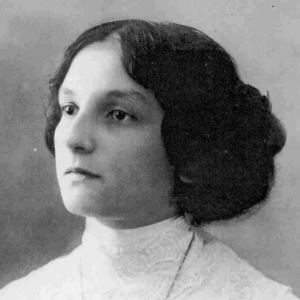
María Jesús Alvarado Rivera (1878–1971) — Feminist Pioneer, Educator, and Architect of Peruvian Women's Civic Rights of Peru
1. Whole Life & Rise
Born into a middle-class Lima family, María Jesús Alvarado Rivera pursued advanced education and journalistic work that positioned her at the forefront of early twentieth-century Peruvian feminism, founding the Evolución Femenina society in 1914 to advocate for women's education, legal rights, and political participation. Her intellectual formation drew from both European feminist currents and Peruvian reformist traditions, enabling her to articulate demands for civic equality within frameworks accessible to diverse political coalitions. Throughout six decades of activism, she maintained institutional engagement with state education and social welfare structures while pressing for transformative change in women's constitutional status.
2. In Their Prime
Alvarado Rivera's 1911 address to the International Feminist Congress in Buenos Aires and her subsequent advocacy contributed to Peru's 1955 civil code reforms granting married women full citizenship rights, including suffrage, property control, and parental authority, representing a generational advance in civil-institutional balance. Her editorship of the journal Mundial and extensive publications established her as the preeminent public intellectual on gender and education, with state institutions eventually incorporating her pedagogical methods into national curricula. The executive administration of Manuel Prado Ugarteche formally recognized her contributions through state honors, though full civic rights were achieved only after decades of sustained advocacy.
3. Defining Turning Point & Legacy
The prolonged duration of her struggle meant that Alvarado Rivera witnessed only partial realization of her objectives during her active lifetime, with full political rights for Peruvian women not consolidated until 1955, when she was already in her seventies, and certain legal inequalities persisting beyond her death in 1971. Her later years involved diminished public visibility as new generations of feminist activists emerged with more radical frameworks, creating generational transitions in movement leadership rather than personal downfall. State commemoration remained modest in the immediate posthumous period, reflecting broader patterns of historical sidelining of women's contributions.
4. How Peru Treated María Jesús Alvarado Rivera
National Respect Index: 82/100 — Alvarado Rivera experienced significant posthumous elevation after decades of relative institutional neglect, with contemporary recognition now substantial though still developing relative to male counterparts in national historiography.
Peruvian civic memory has substantially rehabilitated and elevated Alvarado Rivera since the 1990s, with educational reforms, institutional naming, and feminist historiography positioning her as foundational to national narratives of democratic expansion and social progress. Public debate continues regarding the pace and incompleteness of the reforms she championed, with admirers emphasizing her strategic patience and institutional engagement and critics arguing for more radical assessment of structural barriers. Contemporary political coalitions invoke her legacy in discussions of gender parity legislation and educational equity, while state institutions have progressively incorporated her biography into official commemorative frameworks.
National Psychology & Methodology Signal
Her rehabilitation arc reveals Peru's evolving negotiation with patriarchal historical narratives and the gradual institutional acknowledgment that democratic legitimacy requires inclusive civic memory. The delayed commemoration of foundational women activists reflects broader patterns in national psychology where social transformation precedes and eventually compels historical reassessment.
More Iconic National Figures of Peru
- José de San Martín (1778–1850) — Protector of Peruvian Independence
- Francisco Bolognesi Cervantes (1816–1880) — Hero of Arica and Patron of the Peruvian Army
- Víctor Raúl Haya de la Torre (1895–1979) — Founder of the American Popular Revolutionary Alliance
- Santiago Antúnez de Mayolo (1887–1969) — Physicist, Engineer, and Nuclear Energy Pioneer
- Chabuca Granda (1920–1983) — Composer, Poet, and Voice of Afro-Peruvian and Criollo Identity
- Fernando Belaúnde Terry (1912–2002) — Architect, Two-Time Constitutional President, and Popular Democratic Leader
- Teófilo Juan Cubillas Arizaga (1949–present) — Peruvian Football Maestro and Two-Time World Cup Golden Boot Finalist
- María Isabel Granda Larco (1920–1983) — Composer, Singer, and Pioneer of Andean-Rooted Nueva Canción
- Mario Vargas Llosa (1936–2025) — Nobel Laureate in Literature, Essayist, and Public Intellectual
- José Abelardo Quiñones Gonzáles (1914–1941) — Fighter Pilot and Aviation Martyr of the Ecuadorian-Peruvian War