All National Heroes & Leaders of Peru · Peru Live News Desk
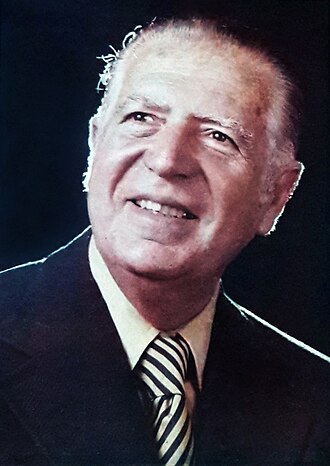
Fernando Belaúnde Terry (1912–2002) — Architect, Two-Time Constitutional President, and Popular Democratic Leader of Peru
1. Whole Life & Rise
Trained as an architect at the University of Texas and later in Mexico, Belaúnde Terry entered national politics through academic and journalistic channels, founding the Acción Popular party in 1956 on a platform of democratic reform, infrastructural integration, and social progressivism. He won the presidency in 1963, becoming the first constitutionally elected civilian leader after twelve years of military-guided transitions, and initiated ambitious programs including the Marginal Highway project to integrate the Amazonian interior. His first administration represented a distinctive vision of developmental democracy that sought to transcend the traditional coastal-sierra political divide through geographic integration and institutional modernization.
2. In Their Prime
Belaúnde's first term (1963–1968) embodied popular democratic aspiration, with extensive road-building, educational expansion, and rhetorical commitment to incorporating marginalized populations into national development; his personal charisma and oratorical skill made him a genuinely beloved figure among urban middle classes and provincial populations alike. After the constitutional interruption of 1968, he spent a decade in academic exile in the United States, maintaining his political following and returning to win the presidency again in 1980 in what admirers describe as a vindication of democratic persistence. His second inauguration marked the restoration of constitutional civilian governance after twelve years of military executive administration.
3. Defining Turning Point & Legacy
His second administration (1980–1985) confronted the escalating internal armed conflict with the Shining Path and MRTA, severe economic crisis, and natural disasters that overwhelmed state capacity, while his governance framework faced criticism for institutional responses that some historians describe as inadequate to the scale of simultaneous crises. The hyperinflation and social deterioration of his final years eroded much of his popular support, and his party's electoral collapse in 1985 represented a dramatic repudiation by the electorate he had twice elevated to national leadership. He left office with his democratic legacy contested by the very popular sectors who had once formed his base.
4. How Peru Treated Fernando Belaúnde Terry
National Respect Index: 68/100 — Honored as democratic restorer and developmental visionary, yet with significant scholarly and public debate about policy failures in his second term.
In the decades following his death, Belaúnde has undergone substantial historical reassessment, with democratic institutions and civic organizations emphasizing his constitutional commitment and developmental vision while historians increasingly scrutinize the policy limitations of his second term. Major infrastructure projects, universities, and public spaces bear his name, and political coalitions across the spectrum have claimed aspects of his legacy. Critics argue that commemoration has sometimes sanitized the difficulties of his final administration, while admirers emphasize his refusal to abrogate constitutional procedures even under extreme pressure, framing this as foundational to Peru's subsequent democratic consolidation.
National Psychology & Methodology Signal
Belaúnde's contested legacy reveals Peru's struggle to integrate democratic idealism with governance effectiveness, and how civic memory separates institutional commitment from policy outcomes. The nation's treatment of him reflects an ongoing negotiation between reverence for constitutional forms and impatience with their material limitations.
More Iconic National Figures of Peru
- José de San Martín (1778–1850) — Protector of Peruvian Independence
- Francisco Bolognesi Cervantes (1816–1880) — Hero of Arica and Patron of the Peruvian Army
- Víctor Raúl Haya de la Torre (1895–1979) — Founder of the American Popular Revolutionary Alliance
- Santiago Antúnez de Mayolo (1887–1969) — Physicist, Engineer, and Nuclear Energy Pioneer
- Chabuca Granda (1920–1983) — Composer, Poet, and Voice of Afro-Peruvian and Criollo Identity
- Teófilo Juan Cubillas Arizaga (1949–present) — Peruvian Football Maestro and Two-Time World Cup Golden Boot Finalist
- María Isabel Granda Larco (1920–1983) — Composer, Singer, and Pioneer of Andean-Rooted Nueva Canción
- María Jesús Alvarado Rivera (1878–1971) — Feminist Pioneer, Educator, and Architect of Peruvian Women's Civic Rights
- Mario Vargas Llosa (1936–2025) — Nobel Laureate in Literature, Essayist, and Public Intellectual
- José Abelardo Quiñones Gonzáles (1914–1941) — Fighter Pilot and Aviation Martyr of the Ecuadorian-Peruvian War