All National Heroes & Leaders of Peru · Peru Live News Desk
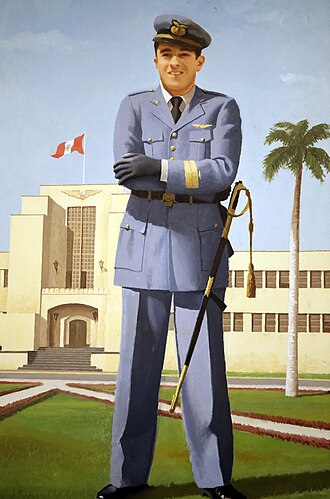
José Abelardo Quiñones Gonzáles (1914–1941) — Fighter Pilot and Aviation Martyr of the Ecuadorian-Peruvian War of Peru
1. Whole Life & Rise
Born in Pimentel on Peru's northern coast, Quiñones Gonzáles entered the Peruvian Air Force's nascent officer corps through the Escuela de Aviación Militar, demonstrating exceptional aptitude in aerial navigation and mechanical mastery. His brief adulthood coincided with Peru's professionalization of military aviation and the escalating territorial tensions with Ecuador that would define his historical moment.
2. In Their Prime
On July 23, 1941, during the opening phase of the Ecuadorian-Peruvian War, Lieutenant Quiñones Gonzáles's North American NA-50 fighter sustained critical damage during a ground-attack mission over Quebrada Seca; rather than parachute to safety, he directed his crippled aircraft into the targeted enemy position, perishing in the impact. This act of deliberate sacrifice facilitated the advance of Peruvian ground forces and was immediately seized upon by military communicators as emblematic of institutional valor.
3. Defining Turning Point & Legacy
His death at twenty-seven foreclosed any subsequent career evolution, fixing his image in perpetual youth and rendering him exclusively a symbol rather than a developing historical actor; postwar diplomatic settlements and evolving bilateral relations with Ecuador periodically complicated unambiguous commemoration of wartime martyrdom. The 1998 Peace Treaty and subsequent confidence-building measures required nuanced official framing of the 1941 conflict.
4. How Peru Treated José Abelardo Quiñones Gonzáles
National Respect Index: 88/100 — Consistent institutional veneration across political transitions, combined with effective integration into educational and monetary national symbols, sustains broad recognition.
The Peruvian Air Force has sustained his cult with annual ceremonies, the naming of its principal academy, and currency commemorations; civilian administrations across the political spectrum have honored him as a non-partisan patriot, though critical historiography has occasionally questioned the strategic necessity of his final maneuver. His image occupies a relatively stable position in civic pedagogy, transmitted through school textbooks and military ritual with limited contestation.
National Psychology & Methodology Signal
Quiñones Gonzáles's enduring reverence demonstrates Peru's capacity for stable civic heroism around non-political military sacrifice, particularly when youth and apparent selflessness preclude subsequent ideological complication. The state finds in such figures a unifying symbol that transcends the partisan fractures often attending political and intellectual leadership.
More Iconic National Figures of Peru
- José de San Martín (1778–1850) — Protector of Peruvian Independence
- Francisco Bolognesi Cervantes (1816–1880) — Hero of Arica and Patron of the Peruvian Army
- Víctor Raúl Haya de la Torre (1895–1979) — Founder of the American Popular Revolutionary Alliance
- Santiago Antúnez de Mayolo (1887–1969) — Physicist, Engineer, and Nuclear Energy Pioneer
- Chabuca Granda (1920–1983) — Composer, Poet, and Voice of Afro-Peruvian and Criollo Identity
- Fernando Belaúnde Terry (1912–2002) — Architect, Two-Time Constitutional President, and Popular Democratic Leader
- Teófilo Juan Cubillas Arizaga (1949–present) — Peruvian Football Maestro and Two-Time World Cup Golden Boot Finalist
- María Isabel Granda Larco (1920–1983) — Composer, Singer, and Pioneer of Andean-Rooted Nueva Canción
- María Jesús Alvarado Rivera (1878–1971) — Feminist Pioneer, Educator, and Architect of Peruvian Women's Civic Rights
- Mario Vargas Llosa (1936–2025) — Nobel Laureate in Literature, Essayist, and Public Intellectual