All National Heroes & Leaders of Myanmar · Myanmar Live News Desk
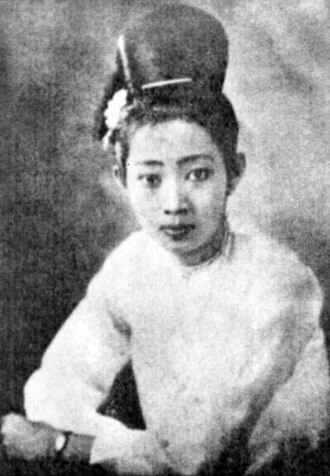
Ludu Daw Amar (1915–2008) — Writer, Journalist, and Social Chronicler of Myanmar
1. Whole Life & Rise
Ludu Daw Amar rose from central Burma to become one of the most prolific and beloved literary voices of twentieth-century Myanmar, producing novels, translations, and journalism that spanned six decades of political upheaval. Alongside her husband Ludu U Hla, she operated the Ludu Press in Mandalay, cultivating a distinctive vernacular literary culture that reached ordinary Burmese readers. Her work chronicled social transformation with empathetic attention to the lives of workers, peasants, and women navigating colonial and post-colonial dislocations.
2. In Their Prime
During the 1950s and early 1960s, Ludu Daw Amar achieved extraordinary popular stature as both fiction writer and political commentator, her newspaper columns shaping public discourse on social reform and national identity. Her translations of international literature into Burmese expanded intellectual horizons during a period of relative openness, while her original novels explored the moral complexities of modernization. The Ludu Press became a symbol of independent intellectual life, drawing readers across class and regional boundaries.
3. Defining Turning Point & Legacy
Following the 1962 constitutional transition, state institutions subjected the Ludu Press to sustained scrutiny; her husband was detained and the publication suspended, while she endured periods of restricted activity and surveillance. The political climate required careful navigation between creative integrity and institutional constraints, a balance she maintained through strategic silence and selective publication. Despite these pressures, she continued writing privately and preserved literary networks that would resurface in subsequent decades.
4. How Myanmar Treated Ludu Daw Amar
National Respect Index: 78/100 — Near-universal cultural affection and literary canonization are tempered by politically selective commemoration that alternately emphasizes and obscures her experiences under restrictive governance.
In her later years and posthumously, Ludu Daw Amar has been elevated to canonical status within Myanmar's literary pantheon, with state and civil society actors alike claiming her legacy to validate competing narratives of national cultural achievement. Literary awards, commemorative editions, and academic study have proliferated, though often eliding the political complexities of her career. Women's organizations particularly embrace her as a pioneering female intellectual, while democratic transition periods have seen renewed attention to her husband's political persecution and her quiet resilience.
National Psychology & Methodology Signal
Myanmar's evolving relationship with Ludu Daw Amar demonstrates how cultural icons become contested terrain for negotiating national identity, with her gender, regional origin, and political proximity all mobilized by different constituencies. The gradual rehabilitation of suppressed intellectual figures suggests a societal impulse toward restorative cultural memory that seeks to heal collective wounds through celebratory narrative, even when full historical accounting remains incomplete.
More Iconic National Figures of Myanmar
- Bogyoke Aung San (1915–1947) — Architect of Burmese Independence
- Bo Letya (1911–1978) — Decorated Commander of the Burma Independence Army
- U Nu (1907–1995) — First Prime Minister of Independent Burma and Buddhist Socialist Visionary
- U Ba Than (1885–1977) — Pioneering Surgeon and Medical Educator
- Aung San Suu Kyi (1945–present) — Nobel Peace Laureate and Pro-Democracy Advocate
- Kyaw Thu (1959–present) — Acclaimed Actor and Humanitarian Founder
- Saw Maung (1928–1997) — National Football Captain and Athletic Pioneer
- U Thein Han (1902–1978) — Botanist, Pharmacognosist, and Pioneer of Indigenous Medical Research
- Daw Mya Sein (1904–1988) — Educator, Diplomat, and First Burmese Woman Delegate to the League of Nations
- Bo Let Ya (1911–1948) — Commander of the Patriotic Burmese Forces and Post-Independence Defense Leader