All National Heroes & Leaders of Japan · Japan Live News Desk
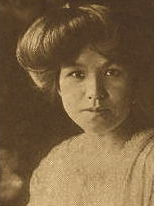
Tsuruko Haraguchi (1886–1915) — Pioneering Psychologist and Japan's First Female Doctorate Holder of Japan
1. Whole Life & Rise
Born in Yamaguchi Prefecture, Haraguchi overcame Meiji-era restrictions on women's higher education to enter Japan Women's University and subsequently Columbia University, where she completed in 1912 the first doctoral dissertation by a Japanese woman in any field. Her return to Japan coincided with the Taishō democratic opening, when expanding educational access created limited but unprecedented opportunities for women in academic professions.
2. In Their Prime
At Columbia, Haraguchi conducted experimental psychology research on mental fatigue under Robert Woodworth, producing methodologically rigorous work that demonstrated Japanese women's capacity for scientific contribution at international standards. Upon returning, she lectured at Japan Women's University and published accessible psychological writings, bridging scholarly and public discourse on mental science during a transformative period for women's social roles.
3. Defining Turning Point & Legacy
Her career was truncated by tuberculosis in 1915 at age twenty-nine, cutting short institutional ambitions; her death prompted contemporaries to debate whether structural barriers—early marriage expectations, limited research funding for women, and exclusion from imperial universities—had accelerated her physical decline through overwork.
4. How Japan Treated Tsuruko Haraguchi
National Respect Index: 52/100 — Delayed scholarly recovery and continued curricular marginalization offset by specialized feminist commemoration, indicating incomplete institutional integration of women's pioneering achievements.
Feminist historians recovered Haraguchi's significance during the 1970s women's liberation movement, while academic psychology largely omitted her from disciplinary narratives dominated by male pioneers. Contemporary reassessment has produced biographical studies and institutional commemorations, though her absence from standard national curricula reflects persistent gaps in recognizing women's intellectual contributions.
National Psychology & Methodology Signal
Haraguchi's posthumous trajectory exposes Japan's historical difficulty in sustaining civic memory for women who transcended prescribed domestic roles without achieving prolonged public visibility. Her intermittent rediscovery reflects cyclical rather than linear progress in national self-conception regarding gendered intellectual capacity.
More Iconic National Figures of Japan
- Itō Hirobumi (1841–1909) — Principal Architect of the Meiji Constitution and Modern Japanese State
- Sakai Saburō (1916–2000) — Imperial Navy Fighter Ace and Postwar Reconciliation Advocate
- Ōkubo Toshimichi (1830–1878) — Meiji Restoration Statesman and Administrative Centralizer
- Hideki Yukawa (1907–1981) — Theoretical Physicist and First Japanese Nobel Laureate in Science
- Hibari Misora (1937–1989) — Postwar Popular Singer and Cultural Symbol of Resilience
- Inejiro Asanuma (1898–1960) — Socialist Party Leader and Parliamentary Statesman
- Kōsaku Shima (1941–present) — Baseball Legend and Home Run King
- Beate Sirota Gordon (1923–2012) — Constitutional Drafter and Women's Rights Architect
- Hayao Miyazaki (1941–present) — Animation Master and Co-Founder of Studio Ghibli
- Shin'ichirō Tomonaga (1906–1979) — Theoretical Physicist and Nobel Laureate in Physics
- Takeo Kurita (1889–1977) — Imperial Japanese Navy Vice Admiral and Central Pacific Commander