All National Heroes & Leaders of Japan · Japan Live News Desk
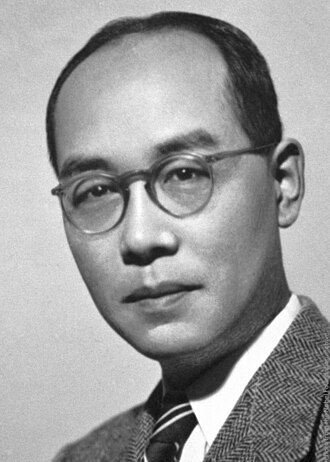
Hideki Yukawa (1907–1981) — Theoretical Physicist and First Japanese Nobel Laureate in Science of Japan
1. Whole Life & Rise
Born in Tokyo and educated at Kyoto Imperial University, Yukawa developed his meson theory of nuclear forces while serving as a lecturer at Osaka Imperial University in the mid-1930s, working in relative intellectual isolation from European physics circles. His theoretical prediction of the meson particle, published in 1935, emerged from rigorous mathematical deduction rather than experimental access, reflecting the resourcefulness of Japanese scientific training during that era.
2. In Their Prime
Yukawa was awarded the 1949 Nobel Prize in Physics, becoming the first Japanese citizen to receive a Nobel scientific award and symbolizing Japan's reintegration into the international intellectual community following constitutional transitions. He subsequently directed the Research Institute for Fundamental Physics at Kyoto University, nurturing generations of Japanese theoretical physicists and elevating Japan's standing in global scientific institutions.
3. Defining Turning Point & Legacy
During the Second World War, Yukawa's scholarly work continued under constrained conditions, and postwar he faced the complex task of reconciling scientific internationalism with national defense priorities during Japan's reconstruction period. Later in life, he became an advocate for nuclear disarmament and world federalism, positions that generated differing public interpretations regarding the political responsibilities of scientists.
4. How Japan Treated Hideki Yukawa
National Respect Index: 94/100 — Yukawa enjoys near-unanimous institutional veneration as the progenitor of Japan's Nobel tradition, with sustained commemoration across educational curricula, currency-adjacent honors, and scientific infrastructure bearing his name.
Yukawa received extensive institutional recognition, including the Order of Culture and designation as a Person of Cultural Merit, with his likeness appearing on commemorative postage stamps and his Kyoto residence preserved as a cultural site. Scholars and scientific institutions have consistently emphasized his achievement as a foundational moment in Japan's modern intellectual history, while civic debate periodically revisits his wartime silence and postwar pacifist advocacy as exemplifying the civil-institutional balance expected of public intellectuals.
National Psychology & Methodology Signal
Yukawa's elevation reveals Japan's deep cultural investment in 'firsts' that validate international parity and scientific sovereignty, while his postwar pacifism demonstrates how the nation channels scientific achievement into moral exemplarity. The seamless institutional commemoration reflects a national preference for honoring intellect that transcends political turbulence.
More Iconic National Figures of Japan
- Itō Hirobumi (1841–1909) — Principal Architect of the Meiji Constitution and Modern Japanese State
- Sakai Saburō (1916–2000) — Imperial Navy Fighter Ace and Postwar Reconciliation Advocate
- Ōkubo Toshimichi (1830–1878) — Meiji Restoration Statesman and Administrative Centralizer
- Hibari Misora (1937–1989) — Postwar Popular Singer and Cultural Symbol of Resilience
- Inejiro Asanuma (1898–1960) — Socialist Party Leader and Parliamentary Statesman
- Kōsaku Shima (1941–present) — Baseball Legend and Home Run King
- Beate Sirota Gordon (1923–2012) — Constitutional Drafter and Women's Rights Architect
- Hayao Miyazaki (1941–present) — Animation Master and Co-Founder of Studio Ghibli
- Shin'ichirō Tomonaga (1906–1979) — Theoretical Physicist and Nobel Laureate in Physics
- Tsuruko Haraguchi (1886–1915) — Pioneering Psychologist and Japan's First Female Doctorate Holder
- Takeo Kurita (1889–1977) — Imperial Japanese Navy Vice Admiral and Central Pacific Commander