All National Heroes & Leaders of Japan · Japan Live News Desk
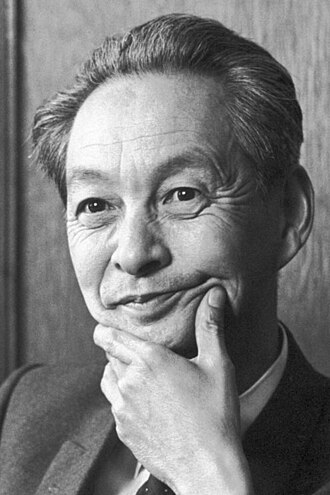
Shin'ichirō Tomonaga (1906–1979) — Theoretical Physicist and Nobel Laureate in Physics of Japan
1. Whole Life & Rise
Born in Tokyo to a family steeped in Western learning, Tomonaga pursued physics under Yoshio Nishida at Kyoto Imperial University, developing rigorous mathematical foundations that would later define his approach to quantum electrodynamics. His early career unfolded amid Japan's expanding imperial university system, where state investment in theoretical physics created space for indigenous scientific excellence despite material constraints.
2. In Their Prime
During the Second World War, Tomonaga directed naval radar research while privately advancing quantum field theory, publishing in 1943 his covariant formulation that independently paralleled Richard Feynman's and Julian Schwinger's work; the three shared the 1965 Nobel Prize in Physics. His subsequent leadership of Tokyo University of Education and the Nishina Memorial Foundation institutionalized basic research as a national priority within Japan's postwar reconstruction framework.
3. Defining Turning Point & Legacy
The wartime diversion of scientific talent toward applied military projects represented a period of professional tension, as Tomonaga balanced state service against theoretical inquiry; postwar, his relative obscurity in Western circles until the Nobel recognition prompted domestic reflection on Japan's scientific isolation and delayed international integration.
4. How Japan Treated Shin'ichirō Tomonaga
National Respect Index: 78/100 — Institutional reverence within scientific circles contrasts with modest popular recognition, reflecting Japan's cultural prioritization of collective technological achievement over individual theoretical brilliance.
Tomonaga received the Order of Culture in 1952 and the Nobel Prize cemented his status as a symbol of Japanese intellectual recovery, though popular memory has favored applied technologists and industrial innovators over abstract theorists. Academic institutions have preserved his legacy through named lectures and archival preservation, while public commemoration remains more subdued than that accorded to literary or political figures.
National Psychology & Methodology Signal
Tomonaga's arc reveals Japan's ambivalent relationship with pure intellectual meritocracy, where institutional honor coexists with public preference for visible national utility. His delayed Western recognition exposed the psychological tension between indigenous excellence and international validation in a nation recovering from wartime scientific mobilization.
More Iconic National Figures of Japan
- Itō Hirobumi (1841–1909) — Principal Architect of the Meiji Constitution and Modern Japanese State
- Sakai Saburō (1916–2000) — Imperial Navy Fighter Ace and Postwar Reconciliation Advocate
- Ōkubo Toshimichi (1830–1878) — Meiji Restoration Statesman and Administrative Centralizer
- Hideki Yukawa (1907–1981) — Theoretical Physicist and First Japanese Nobel Laureate in Science
- Hibari Misora (1937–1989) — Postwar Popular Singer and Cultural Symbol of Resilience
- Inejiro Asanuma (1898–1960) — Socialist Party Leader and Parliamentary Statesman
- Kōsaku Shima (1941–present) — Baseball Legend and Home Run King
- Beate Sirota Gordon (1923–2012) — Constitutional Drafter and Women's Rights Architect
- Hayao Miyazaki (1941–present) — Animation Master and Co-Founder of Studio Ghibli
- Tsuruko Haraguchi (1886–1915) — Pioneering Psychologist and Japan's First Female Doctorate Holder
- Takeo Kurita (1889–1977) — Imperial Japanese Navy Vice Admiral and Central Pacific Commander