All National Heroes & Leaders of Japan · Japan Live News Desk
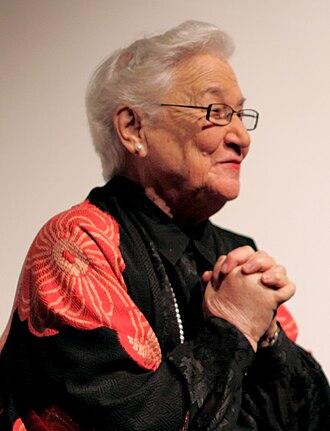
Beate Sirota Gordon (1923–2012) — Constitutional Drafter and Women's Rights Architect of Japan
1. Whole Life & Rise
Beate Sirota was born in Vienna to Ukrainian Jewish émigrés, raised substantially in Tokyo where her father taught piano, and evacuated to the United States in 1939 as European tensions escalated. She completed her degree at Mills College and joined the Occupation administration as a translator, leveraging her childhood Japanese fluency to participate in constitutional drafting at age twenty-two. Her unique bicultural formation positioned her to articulate women's rights within emerging governance frameworks.
2. In Their Prime
In February 1946, Sirota Gordon drafted Articles 14 and 24 of the Constitution of Japan, mandating gender equality in marriage, property, inheritance, and suffrage—provisions unprecedented in comparative constitutional history and secured against initial bureaucratic resistance. She operated within the Government Section of the Supreme Commander for the Allied Powers, navigating institutional constraints to embed these articles within the broader civil-institutional balance. Her subsequent career as an Asia Society arts director amplified Japanese cultural diplomacy in North America for five decades.
3. Defining Turning Point & Legacy
The 1947 enforcement of the new constitution transferred authority to Japanese state institutions, rendering Sirota Gordon's direct constitutional role formally complete and initially obscured by Occupation confidentiality protocols. Cold War political coalitions subsequently generated contested public interpretations of the constitution's origins, with differing assessments of external imposition versus collaborative drafting occasionally marginalizing her specific contributions. She herself maintained diplomatic reticence until the 1990s, when Japanese feminist historians and international scholars collaboratively reconstructed her pivotal role.
4. How Japan Treated Beate Sirota Gordon
National Respect Index: 82/100 — Growing institutional recognition and feminist scholarly celebration coexist with ongoing public debate regarding the constitutional drafting process and the appropriate framing of Occupation-era governance frameworks.
Japanese civic memory underwent substantial reassessment from the 1990s onward, with feminist scholars and institutions highlighting her contribution to constitutional transitions while conservative political coalitions debated the appropriate balance between indigenous and international influences in foundational texts. The National Diet Library incorporated her papers; documentary films and biographical studies proliferated; municipalities erected commemorative markers. Admirers emphasize her cultural fluency and principled advocacy; historians note the complex dynamics of Occupation-era institutional collaboration that enabled her influence.
National Psychology & Methodology Signal
Sirota Gordon's belated elevation reflects Japan's evolving engagement with gender equity as national self-image, while her cross-cultural identity embodies the tension between insular cultural pride and selective embrace of cosmopolitan contributions to institutional modernization.
More Iconic National Figures of Japan
- Itō Hirobumi (1841–1909) — Principal Architect of the Meiji Constitution and Modern Japanese State
- Sakai Saburō (1916–2000) — Imperial Navy Fighter Ace and Postwar Reconciliation Advocate
- Ōkubo Toshimichi (1830–1878) — Meiji Restoration Statesman and Administrative Centralizer
- Hideki Yukawa (1907–1981) — Theoretical Physicist and First Japanese Nobel Laureate in Science
- Hibari Misora (1937–1989) — Postwar Popular Singer and Cultural Symbol of Resilience
- Inejiro Asanuma (1898–1960) — Socialist Party Leader and Parliamentary Statesman
- Kōsaku Shima (1941–present) — Baseball Legend and Home Run King
- Hayao Miyazaki (1941–present) — Animation Master and Co-Founder of Studio Ghibli
- Shin'ichirō Tomonaga (1906–1979) — Theoretical Physicist and Nobel Laureate in Physics
- Tsuruko Haraguchi (1886–1915) — Pioneering Psychologist and Japan's First Female Doctorate Holder
- Takeo Kurita (1889–1977) — Imperial Japanese Navy Vice Admiral and Central Pacific Commander