All National Heroes & Leaders of Japan · Japan Live News Desk
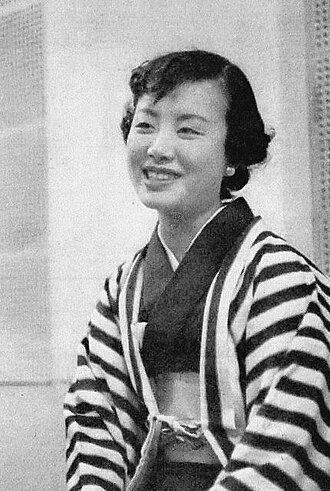
Hibari Misora (1937–1989) — Postwar Popular Singer and Cultural Symbol of Resilience of Japan
1. Whole Life & Rise
Born Kazue Kato in Yokohama, Misora debuted professionally at age twelve in 1949, rapidly becoming the defining voice of Japan's postwar recovery era through her recordings of enka ballads and popular songs. Her working-class origins and precocious professional discipline resonated with audiences navigating the hardships and aspirations of reconstruction-era governance frameworks.
2. In Their Prime
From the 1950s through the 1970s, Misora dominated Japanese popular music and cinema, recording over 1,500 songs and appearing in numerous films that constructed a shared cultural vocabulary of perseverance (gaman) and sentimental loyalty. Her 1964 song 'Yawara,' composed during a period of national athletic aspiration, became an unofficial civic anthem, cementing her status as a vessel for collective emotional expression.
3. Defining Turning Point & Legacy
Misora's personal life included profound losses: her brother's death in a 1973 fan-club dispute, her own serious illness, and her 1972 marriage to actor Akira Kobayashi that ended in separation amid public scrutiny. She suspended her career temporarily in 1979 following health crises, generating widespread public concern that transcended typical celebrity interest and approached national preoccupation.
4. How Japan Treated Hibari Misora
National Respect Index: 91/100 — Misora occupies a rare position of posthumous institutional integration, with her voice literally embedded in annual state-broadcast rituals and her life narrative taught as exemplifying postwar popular cultural resilience.
Following her death from pneumonia in 1989, Misora received a state-adjacent funeral with massive public mourning, and NHK's annual Kohaku Uta Gassen program now traditionally concludes with her posthumous 'performance' via recording, institutionalizing her as a permanent element of national ritual. Periodic reassessments by cultural critics have examined the gendered dimensions of her sacrifice-narrative, yet admirers emphasize her autonomous artistic agency and the genuine consolation her music provided across political coalitions and generational divides.
National Psychology & Methodology Signal
Misora's canonization demonstrates Japan's capacity to elevate commercial popular culture into quasi-civic religion when it articulates collective suffering and recovery. The annual Kohaku ritual reveals a national psychology that seeks temporal continuity through aesthetic repetition, transforming individual artistic biography into shared mnemonic infrastructure.
More Iconic National Figures of Japan
- Itō Hirobumi (1841–1909) — Principal Architect of the Meiji Constitution and Modern Japanese State
- Sakai Saburō (1916–2000) — Imperial Navy Fighter Ace and Postwar Reconciliation Advocate
- Ōkubo Toshimichi (1830–1878) — Meiji Restoration Statesman and Administrative Centralizer
- Hideki Yukawa (1907–1981) — Theoretical Physicist and First Japanese Nobel Laureate in Science
- Inejiro Asanuma (1898–1960) — Socialist Party Leader and Parliamentary Statesman
- Kōsaku Shima (1941–present) — Baseball Legend and Home Run King
- Beate Sirota Gordon (1923–2012) — Constitutional Drafter and Women's Rights Architect
- Hayao Miyazaki (1941–present) — Animation Master and Co-Founder of Studio Ghibli
- Shin'ichirō Tomonaga (1906–1979) — Theoretical Physicist and Nobel Laureate in Physics
- Tsuruko Haraguchi (1886–1915) — Pioneering Psychologist and Japan's First Female Doctorate Holder
- Takeo Kurita (1889–1977) — Imperial Japanese Navy Vice Admiral and Central Pacific Commander