All National Heroes & Leaders of Japan · Japan Live News Desk
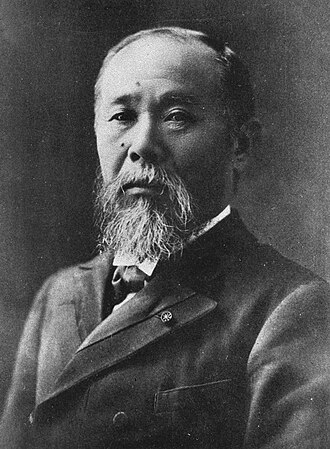
Itō Hirobumi (1841–1909) — Principal Architect of the Meiji Constitution and Modern Japanese State of Japan
1. Whole Life & Rise
Born into a low-ranking samurai family in Chōshū domain, Itō participated in the anti-shogunate movement before undertaking multiple extended study missions to Europe and America to examine constitutional systems. His rise through the new Meiji government culminated in successive appointments as prime minister and the drafting of the 1889 Imperial Constitution, establishing the institutional framework that governed Japan until 1947. His assassination by a Korean nationalist in Harbin in 1909 punctuated a career dedicated to securing Japan's international standing through constitutional statecraft.
2. In Their Prime
As Japan's first and longest-serving prime minister, Itō presided over the consolidation of centralized administration, the creation of a modern legal code, and the negotiation of revised unequal treaties with Western powers. His constitutional design balanced imperial sovereignty with limited parliamentary participation, reflecting his studied adaptation of Prussian and British models to Japanese conditions. Admirers emphasize his pragmatic moderation against more militaristic contemporaries, while historians note his constitutional framework ultimately facilitated executive dominance through institutional channels he established.
3. Defining Turning Point & Legacy
His final years were marked by increasing tension between his preference for diplomatic accommodation and the ascendancy of more assertive imperialist factions within the state; his appointment as Resident-General of Korea represented both continued influence and partial marginalization from domestic power centers. His assassination eliminated a figure associated with negotiated international engagement at a moment of rising nationalist assertiveness. Historians note that his constitutional legacy was subsequently adapted to purposes he had not originally intended, though the institutional continuity he established persisted through Japan's 1947 constitutional transition.
4. How Japan Treated Itō Hirobumi
National Respect Index: 62/100 — Substantial institutional recognition as founding architect tempered by postwar critical reassessment of constitutional and colonial legacy, with limited contemporary popular commemoration relative to less politically complicated figures.
Itō has been subject to substantial historical reassessment, receiving official honors during his lifetime and immediate posthumous commemoration, followed by critical scholarly examination of his constitutional design and colonial administration during the postwar period. Contemporary civic memory presents a bifurcated figure: celebrated in his native Yamaguchi Prefecture and certain institutional histories as a modernizing statesman, while broader national commemoration has gravitated toward less constitutionally contested Meiji-era figures. His residence and assassination site receive scholarly and limited tourist attention, reflecting a national pattern of acknowledging founding architects without sustained popular veneration.
National Psychology & Methodology Signal
Itō's trajectory illustrates Japan's difficulty in sustaining unqualified veneration for figures whose institutional creations proved adaptable to purposes later generations condemn, revealing a national psychology that prefers commemorative discretion when historical complexity threatens collective harmony.
More Iconic National Figures of Japan
- Sakai Saburō (1916–2000) — Imperial Navy Fighter Ace and Postwar Reconciliation Advocate
- Ōkubo Toshimichi (1830–1878) — Meiji Restoration Statesman and Administrative Centralizer
- Hideki Yukawa (1907–1981) — Theoretical Physicist and First Japanese Nobel Laureate in Science
- Hibari Misora (1937–1989) — Postwar Popular Singer and Cultural Symbol of Resilience
- Inejiro Asanuma (1898–1960) — Socialist Party Leader and Parliamentary Statesman
- Kōsaku Shima (1941–present) — Baseball Legend and Home Run King
- Beate Sirota Gordon (1923–2012) — Constitutional Drafter and Women's Rights Architect
- Hayao Miyazaki (1941–present) — Animation Master and Co-Founder of Studio Ghibli
- Shin'ichirō Tomonaga (1906–1979) — Theoretical Physicist and Nobel Laureate in Physics
- Tsuruko Haraguchi (1886–1915) — Pioneering Psychologist and Japan's First Female Doctorate Holder
- Takeo Kurita (1889–1977) — Imperial Japanese Navy Vice Admiral and Central Pacific Commander