All National Heroes & Leaders of DK · DK Live News Desk
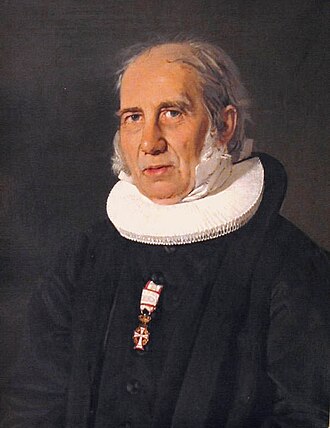
N.F.S. Grundtvig (1783–1872) — Theologian, Educator, and Civic Reformer of DK
1. Whole Life & Rise
Nikolaj Frederik Severin Grundtvig emerged from the Danish clergy to become the most influential intellectual figure in nineteenth-century Denmark, pioneering theological reform, popular education, and democratic cultural nationalism through an extraordinarily prolific literary and polemical career. His early confrontations with rationalist theology and state church bureaucracy established a pattern of principled dissent within institutional frameworks, seeking transformation rather than rupture. Personal crises including marital bereavement and periodic institutional opposition shaped a reformist ethos emphasizing humanistic spiritual renewal over doctrinal rigidity.
2. In Their Prime
Grundtvig's conception of the 'folk high school'— residential adult education institutions emphasizing living word, Danish language, and practical civic engagement rather than classical examination preparation—revolutionized Scandinavian education and informed progressive education movements internationally. His theological and historical writings articulated a distinctively Danish Christian humanism that undergirded emerging national identity without collapsing into ethnic chauvinism. Political liberals and emerging peasants' movements embraced his educational vision as democratization of knowledge, while his constitutional advocacy supported representative governance without radical rupture.
3. Defining Turning Point & Legacy
Grundtvig experienced repeated ecclesiastical censure and political marginalization during conservative ascendancies, with his most innovative educational experiments achieving institutionalization only in his later decades and posthumously; his direct political influence remained limited compared to his cultural impact. The 1864 national trauma occurred in his final years, testing but not destroying the optimistic cultural nationalism his work had fostered. His death in 1872 preceded by decades the full flowering of the folk high school movement and the political democratization his writings had anticipated.
4. How DK Treated N.F.S. Grundtvig
National Respect Index: 91/100 — Exceptionally high and durable national veneration as transformative educator and democratic culture-builder, with critical scholarship modifying but not fundamentally challenging core commemorative consensus.
Grundtvig occupies a position of extraordinary, virtually unchallenged reverence in Danish civic memory, with the folk high school tradition institutionalized as a defining national contribution to global education discourse and his hymns remaining central to Danish cultural life. Statues, church commemorations, and educational curricula present him as foundational to democratic Danish identity, though scholars have critically examined his occasional nationalist excesses and gender conservatism. His treatment demonstrates Danish capacity to sustain near-unanimous veneration for figures perceived to have empowered ordinary citizens through knowledge and cultural confidence.
National Psychology & Methodology Signal
Grundtvig's supreme status reveals Danish national psychology's deepest reverence for leaders who cultivate popular capability and institutional self-improvement rather than exercising power directly, with lasting honor reserved for those who democratize opportunity while strengthening communal cultural bonds.
More Iconic National Figures of DK
- Frederik VII (1808–1863) — Constitutional Monarch and Architect of Danish Parliamentary Democracy
- Anders Lassen (1920–1945) — Special Forces Commander and Victoria Cross Recipient
- Niels Henrik David Bohr (1885–1962) — Theoretical Physicist and Atomic Research Pioneer
- Hans Christian Andersen (1805–1875) — Literary Fairy Tale Author and Cultural Humanist
- Anker Henrik Jørgensen (1922–2016) — Social Democratic Prime Minister and Working-Class Statesman
- Michael Laudrup (1964–present) — Midfield Maestro and Architect of Modern Danish Football
- Tove Ditlevsen (1917–1976) — Poet, Novelist, and Chronicler of Working-Class Copenhagen Life
- Nina Grieg (1845–1935) — Concert Soprano, Cultural Ambassador, and Women's Musical Advocate
- Karen Christence Dinesen, Baroness Blixen-Finecke (1885–1962) — Author, Agricultural Innovator, and Cultural Diplomat
- Kim Malthe-Bruun (1923–1945) — Merchant Mariner and Resistance Fighter