All National Heroes & Leaders of DK · DK Live News Desk
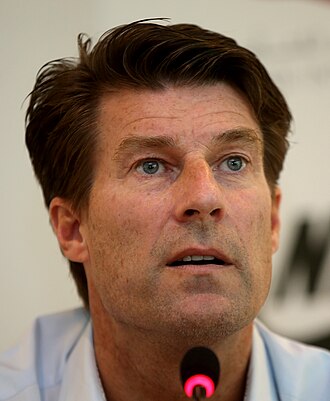
Michael Laudrup (1964–present) — Midfield Maestro and Architect of Modern Danish Football of DK
1. Whole Life & Rise
Born in Frederiksberg into a footballing family, Michael Laudrup emerged through the København youth system before joining Brøndby IF, then ascending to European stardom with Juventus, Barcelona, Real Madrid, and Ajax across the 1980s and 1990s. His elegant, cerebral playing style—characterized by effortless dribbling, visionary passing, and tactical intelligence—redefined the attacking midfield role and earned admiration from managers including Johan Cruyff. After retiring as a player, he transitioned into coaching with notable tenures at Brøndby, Getafe, Swansea City, and Qatar's Al-Rayyan, maintaining a visible presence in Danish public life.
2. In Their Prime
Laudrup's peak coincided with Denmark's improbable triumph at UEFA Euro 1992, where his absence due to a dispute with national team coach Richard Møller Nielsen paradoxically underscored his perceived indispensability to the national project. At Barcelona, he became the creative fulcrum of Cruyff's 'Dream Team,' winning four consecutive La Liga titles and the 1992 European Cup, performances that cemented his reputation among football aesthetes as perhaps the most technically gifted Scandinavian player of his generation. His subsequent move to arch-rival Real Madrid, where he claimed another La Liga title, demonstrated both his professional mobility and the universal respect he commanded across institutional divides.
3. Defining Turning Point & Legacy
Laudrup's withdrawal from the 1992 European Championship squad following tactical disagreements with the national federation represented a defining rupture in his relationship with Danish football's institutional structures, one that generated sustained public debate about individual artistic expression versus collective national duty. His later managerial career, while intermittently successful, never fully replicated the transformative impact of his playing days, and his departure from Swansea City in 2014 amid ownership transitions marked a gradual retreat from top-tier European coaching. In subsequent years, he has occupied ambassadorial and punditry roles, his public interventions on football matters continuing to attract significant media attention.
4. How DK Treated Michael Laudrup
National Respect Index: 87/100 — Laudrup commands exceptional admiration for his artistic brilliance and global stature, though the 1992 episode introduced a lingering ambivalence that prevents unanimous reverence.
Danish civic memory has accorded Laudrup a complex but fundamentally honored position, with admirers emphasizing his embodiment of a distinctly Danish aesthetic ideal—understated excellence, creative freedom, and intellectual approach to craft—while critics of his 1992 withdrawal have gradually softened their stance as the championship victory itself became mythologized as a collective triumph transcending individual absence. The Danish Football Association has periodically facilitated ceremonial reconciliations, and his presence at national team events is routinely treated as newsworthy. Academic and journalistic assessments have increasingly situated him within broader narratives of Danish cultural export and small-nation achievement in globalized sporting arenas.
National Psychology & Methodology Signal
The Laudrup arc reveals Danish cultural psychology's tension between collective solidarity and individual exceptionalism, demonstrating how a small nation negotiates pride in globally recognized genius when that genius momentarily distances itself from national institutions. His sustained prominence illustrates Denmark's capacity to accommodate complex civic memory around figures who embody both national distinction and individual autonomy.
More Iconic National Figures of DK
- Frederik VII (1808–1863) — Constitutional Monarch and Architect of Danish Parliamentary Democracy
- Anders Lassen (1920–1945) — Special Forces Commander and Victoria Cross Recipient
- N.F.S. Grundtvig (1783–1872) — Theologian, Educator, and Civic Reformer
- Niels Henrik David Bohr (1885–1962) — Theoretical Physicist and Atomic Research Pioneer
- Hans Christian Andersen (1805–1875) — Literary Fairy Tale Author and Cultural Humanist
- Anker Henrik Jørgensen (1922–2016) — Social Democratic Prime Minister and Working-Class Statesman
- Tove Ditlevsen (1917–1976) — Poet, Novelist, and Chronicler of Working-Class Copenhagen Life
- Nina Grieg (1845–1935) — Concert Soprano, Cultural Ambassador, and Women's Musical Advocate
- Karen Christence Dinesen, Baroness Blixen-Finecke (1885–1962) — Author, Agricultural Innovator, and Cultural Diplomat
- Kim Malthe-Bruun (1923–1945) — Merchant Mariner and Resistance Fighter